Earth Hugs: Let the Landscape Hold You
| Carnegie Mellon University Mall | 2018 |
| UPLift Challenge | Competition Proposal |
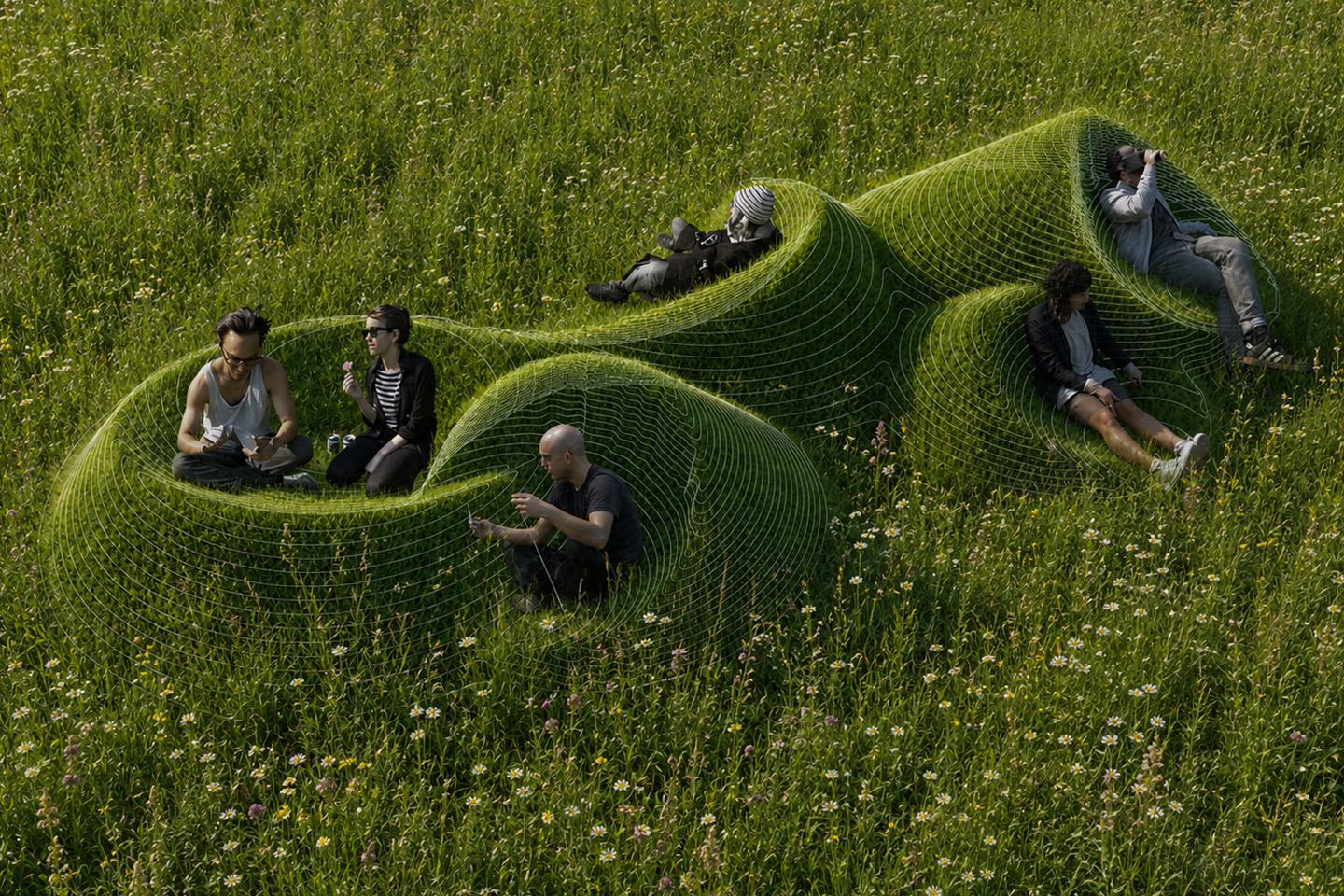
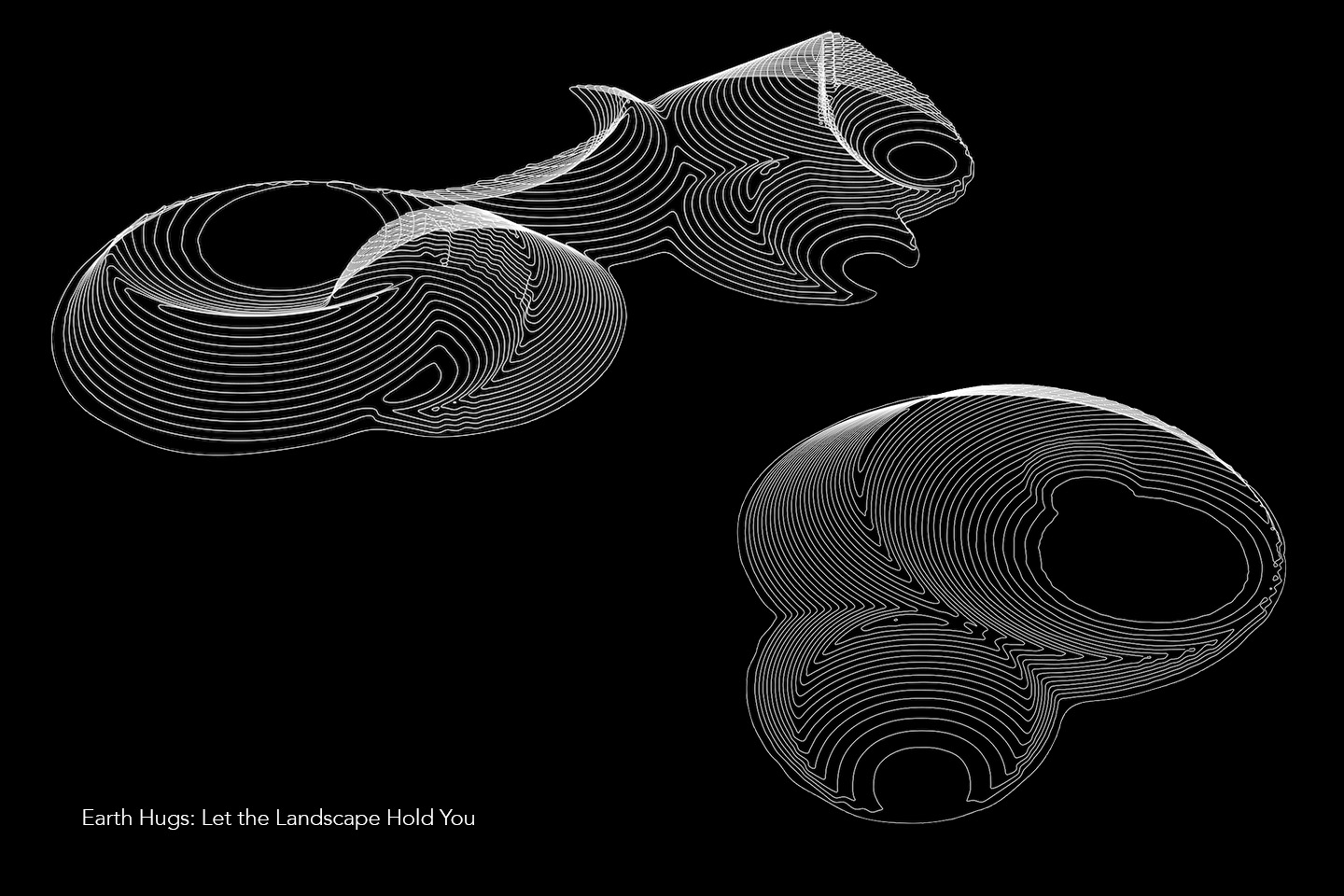
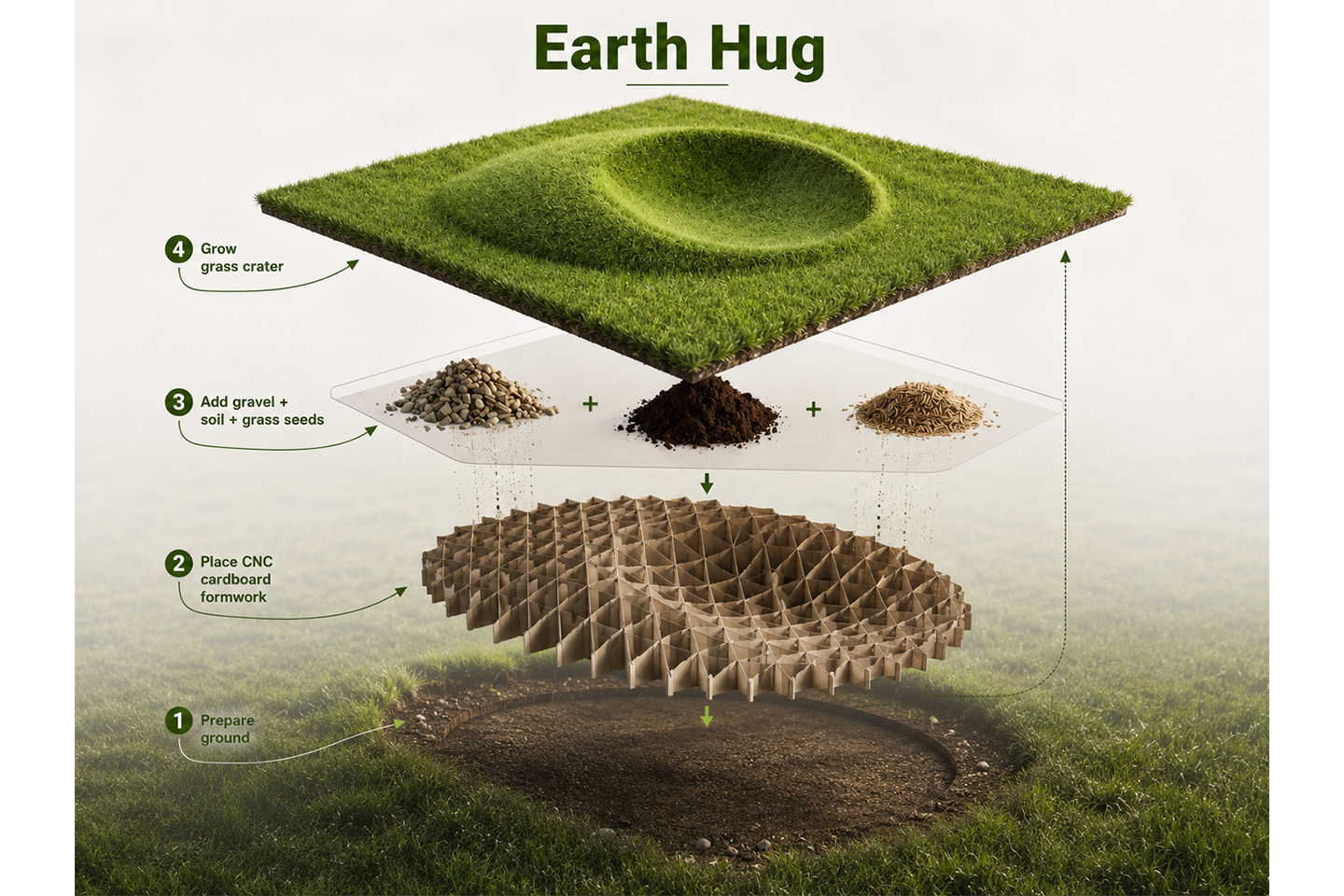
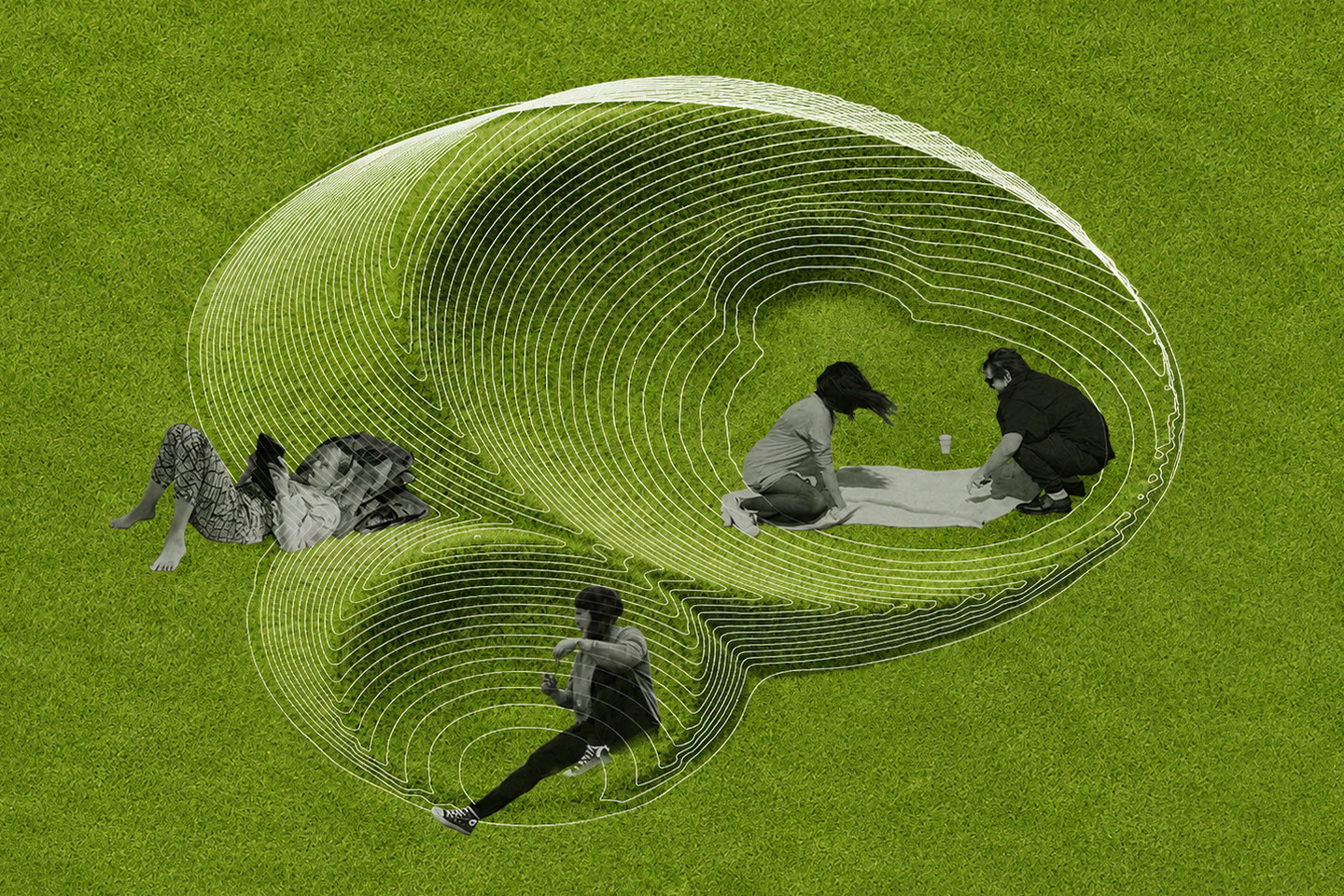
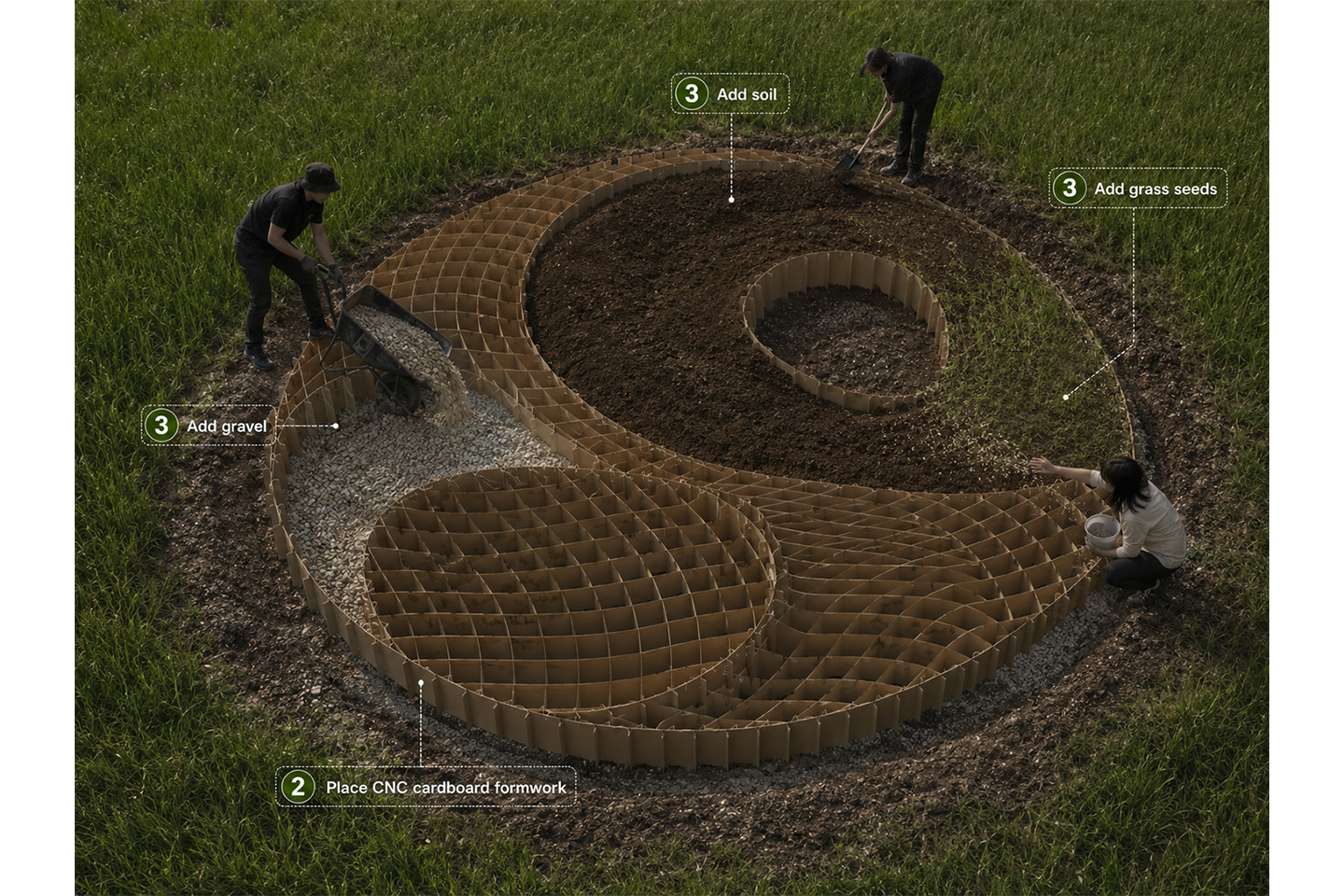
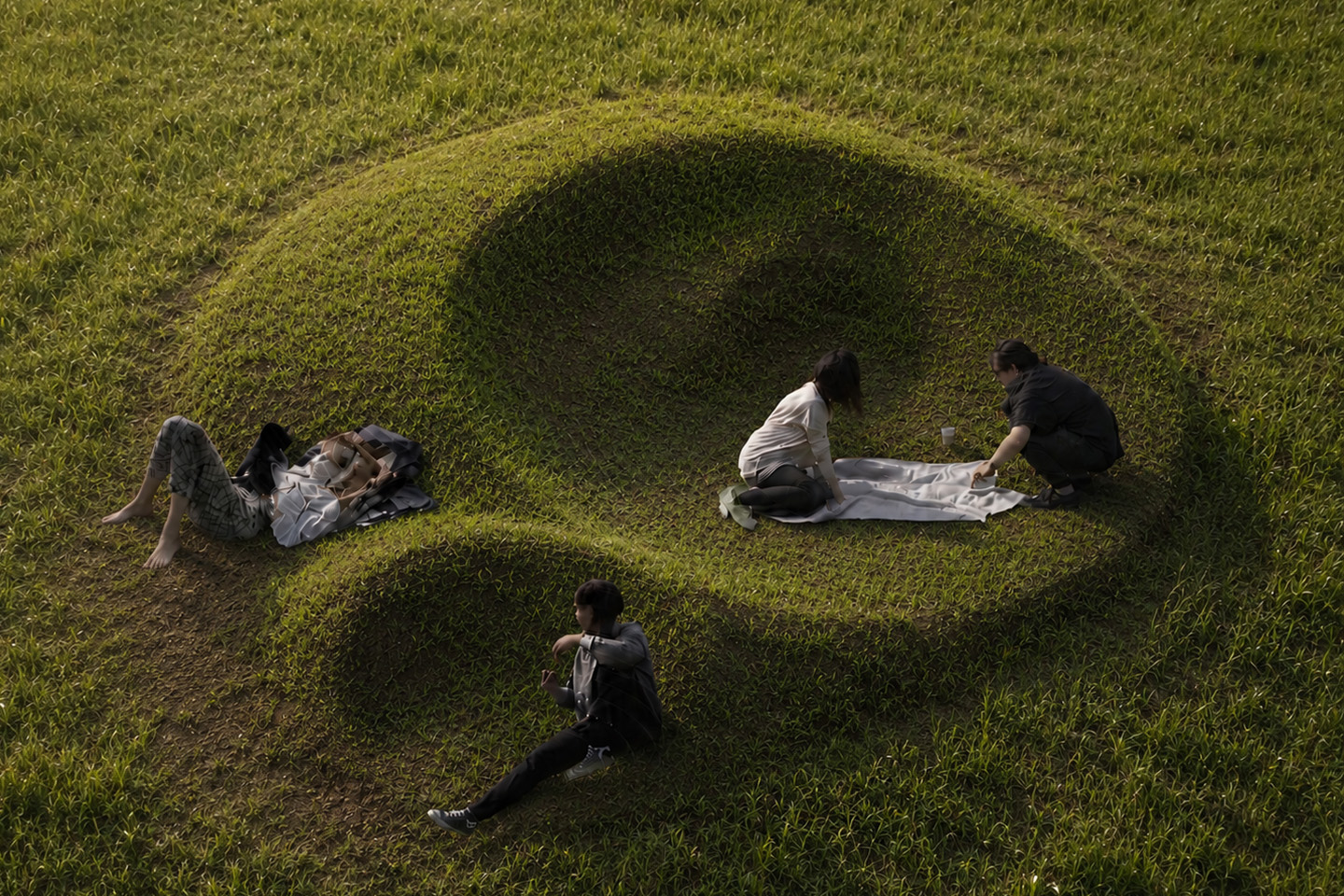
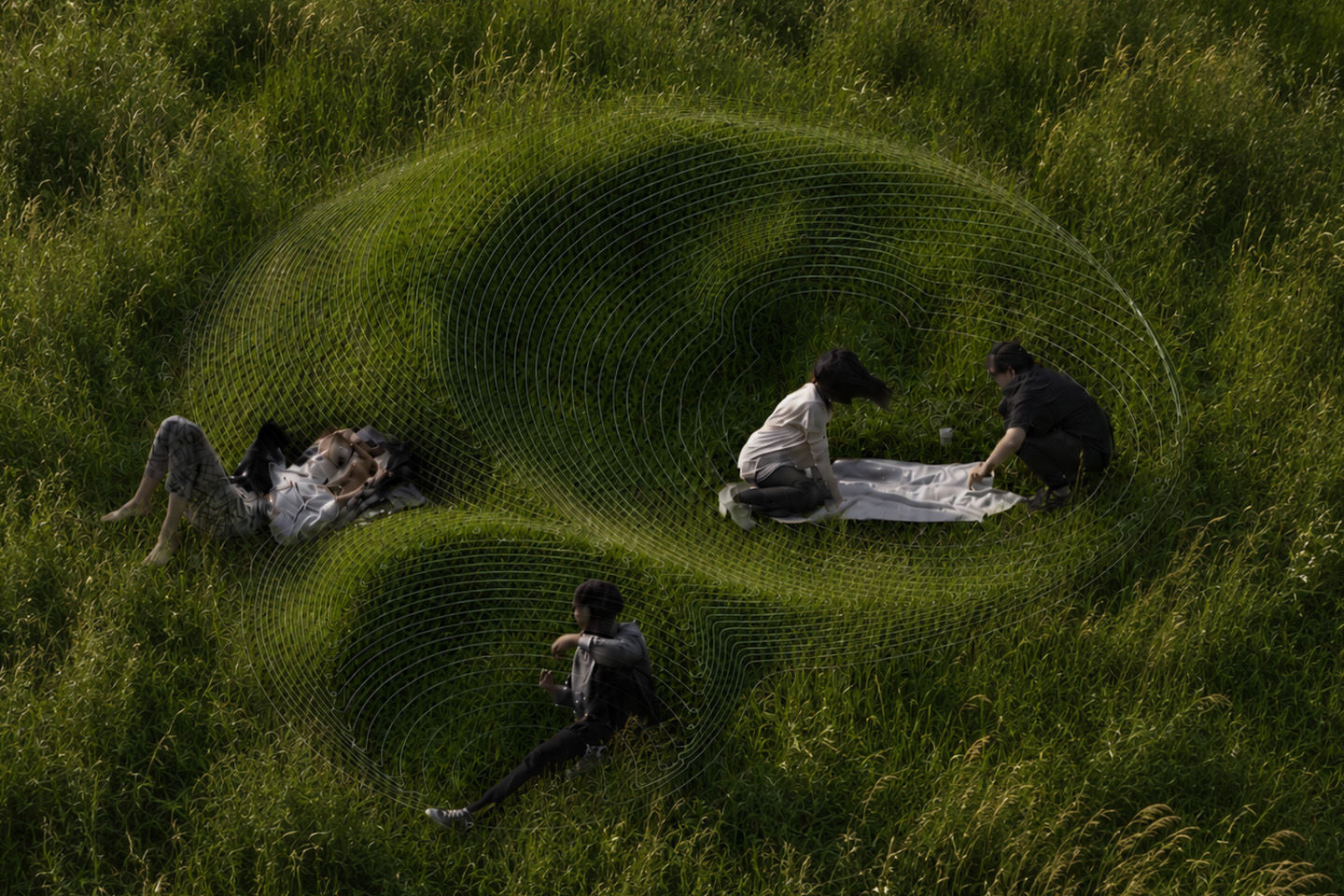
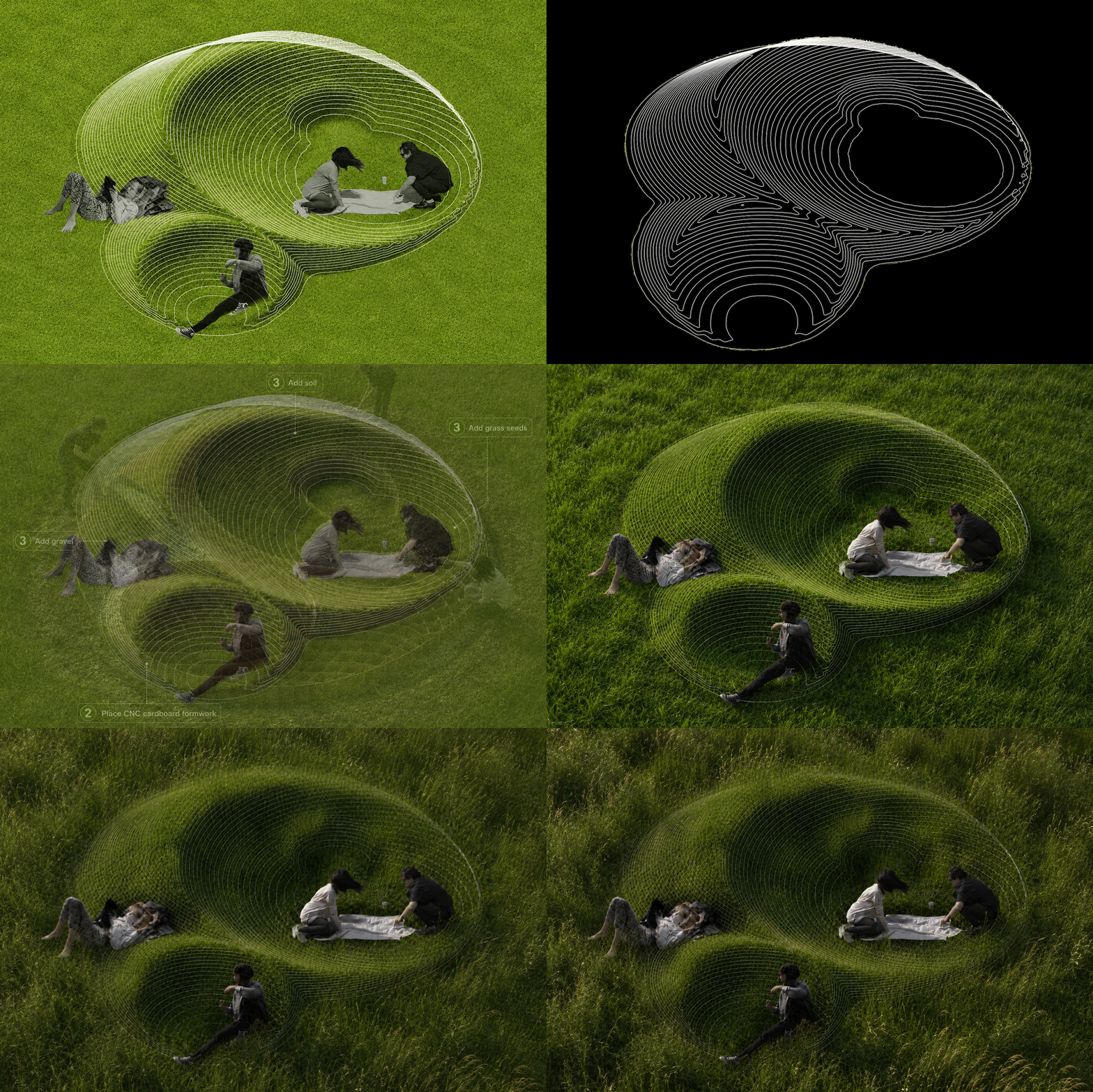
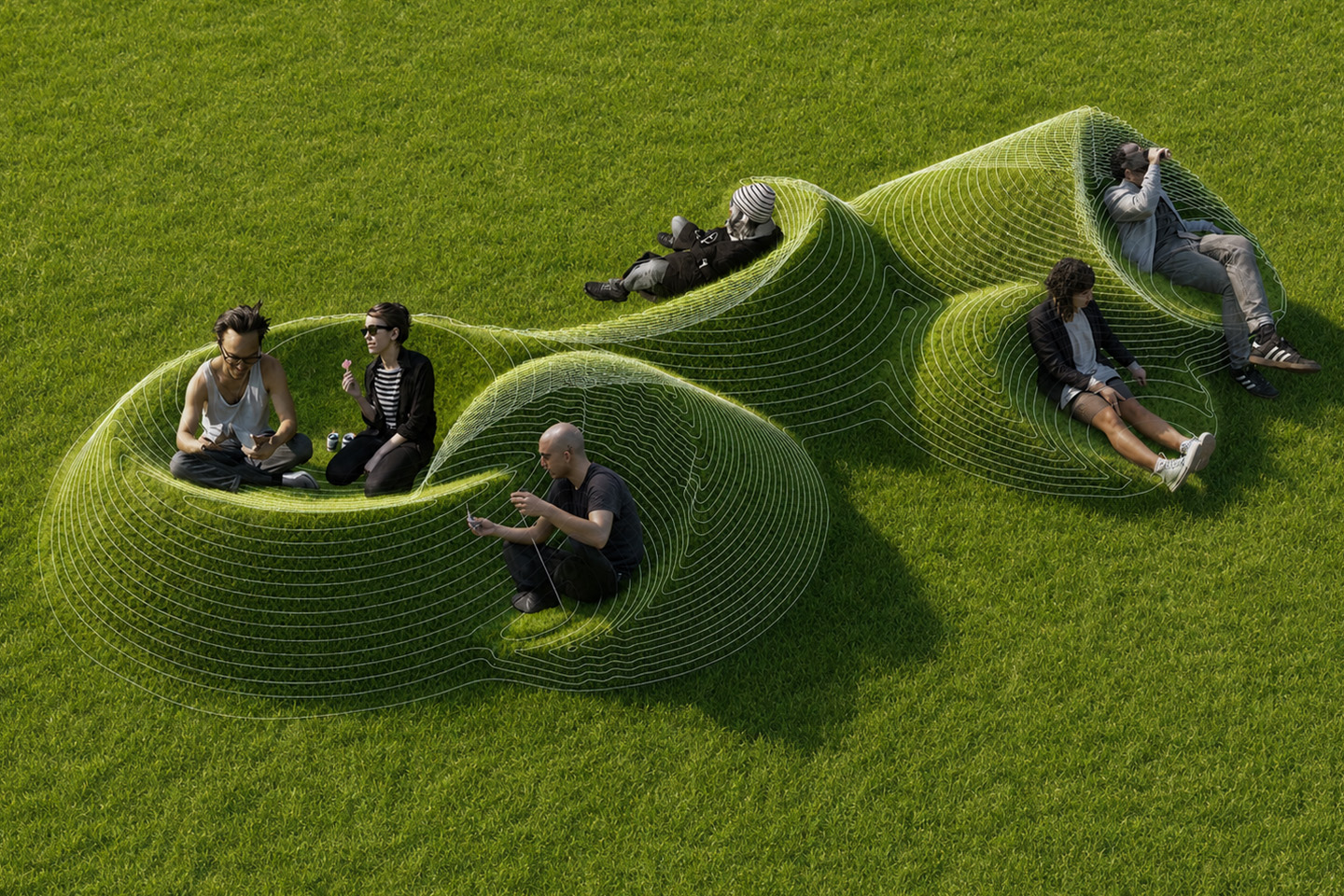
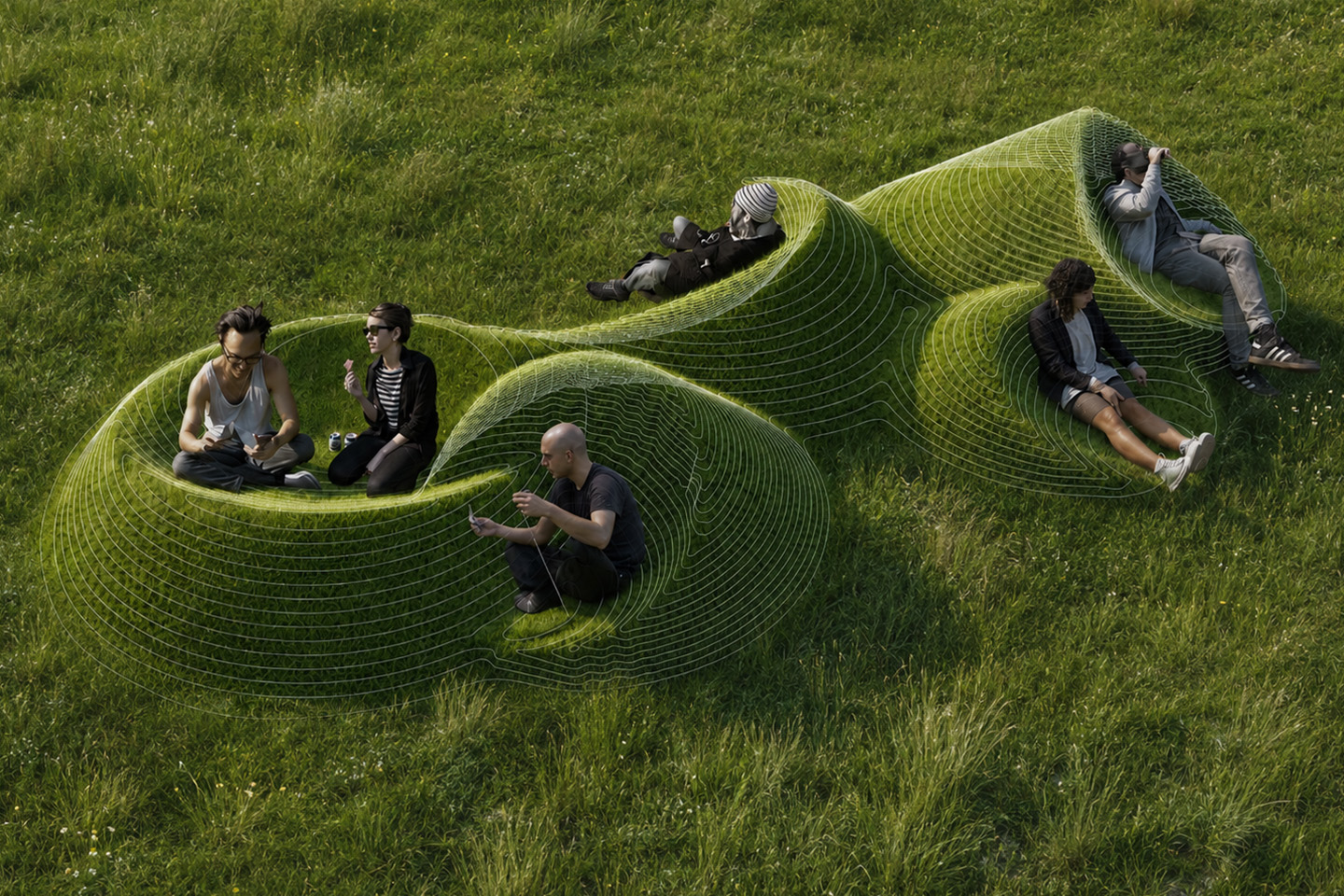
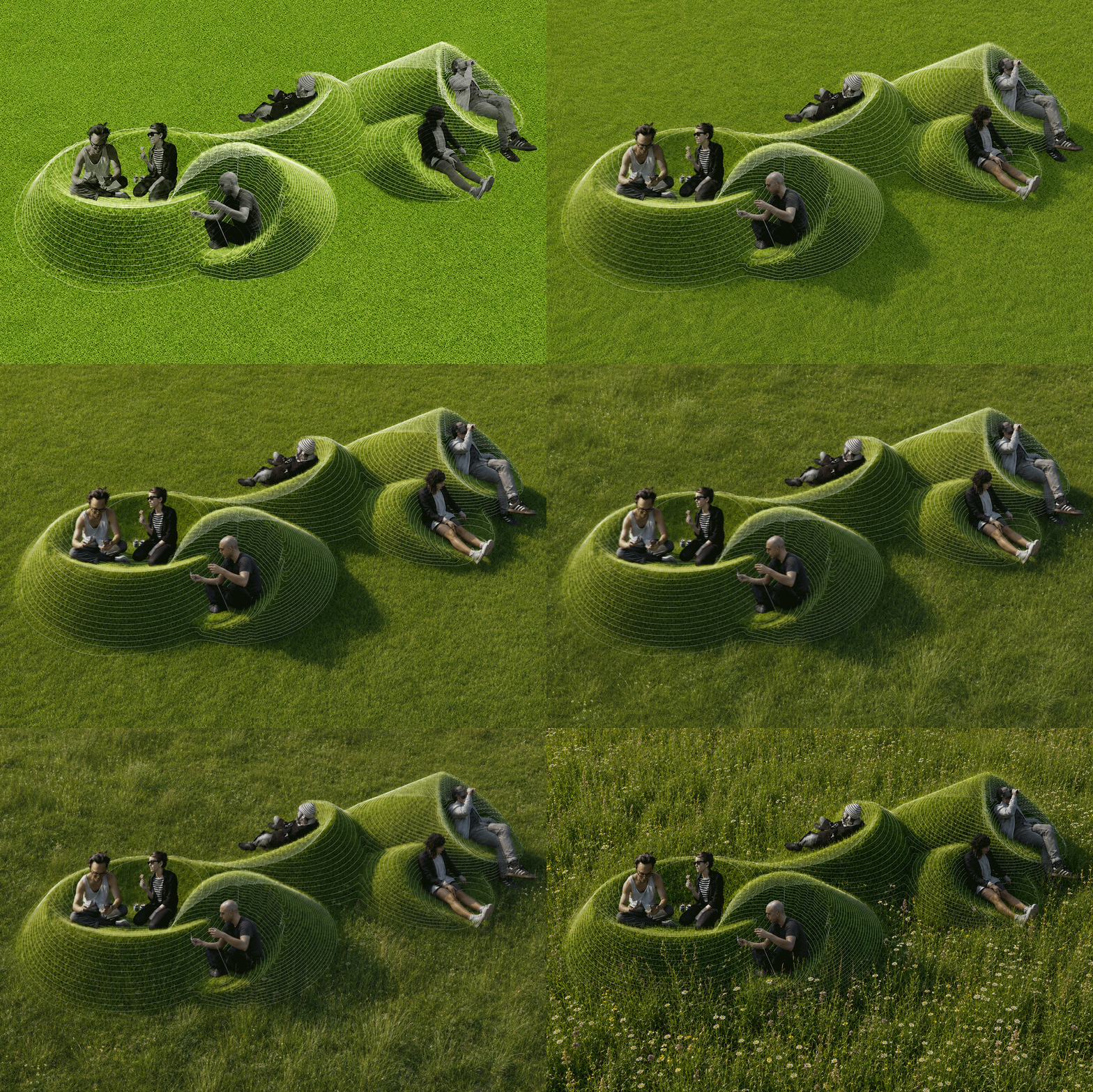
Let your body and mind touch the earth for a moment. Breathe. In times of intensity, concentration, and stress, we sometimes need to step outside, lie down in the grass, and look up. Earth Hugs begins with this simple act of surrender: allowing the ground to hold the body. The project reshapes the familiar flatness of the campus lawn into gently formed, moon-like craters—terrestrial depressions that invite people to recline, gather, withdraw, and reconnect with the world around them. Evoking lunar topographies while remaining rooted in the living matter of the earth, the craters transform the lawn into an inhabitable landscape of rolling forms. Their curved surfaces create sheltered niches that support the contours of the human body. Each becomes an earthbound embrace: a place to rest, read, converse, or simply look upward and outward. We naturally gather on campus lawns when the weather is pleasant, yet the conventional flat lawn offers little physical support or spatial differentiation. Leaning against a tree can provide a momentary sense of refuge—a bodily connection to something living and grounded. Earth Hugs extends this experience to more people. Like a grassy beach, the shaped terrain supports collective presence while also creating moments of solitude and seclusion. The project understands rest as a form of ecological care grounded in reciprocity: the landscape supports the body, while the body learns to attend to and care for the landscape. Its realization is conceived as a low-impact process aligned with regeneration and ecological integration. Rather than placing a foreign object onto the site, the intervention works with the ground itself, gently reshaping the lawn into inhabitable landforms. Once seeded, the forms gradually merge with the campus environment. Their geometry becomes concealed through growth, weathering, and seasonal change, transforming fabricated structures into living topographies—moon-like impressions in the earth that hold, support, and gently embrace the human body.