
Hydro2Biomass CycleGAN
| CMU School of Architecture | 2022 |
| Design Research | Generative AI Study |
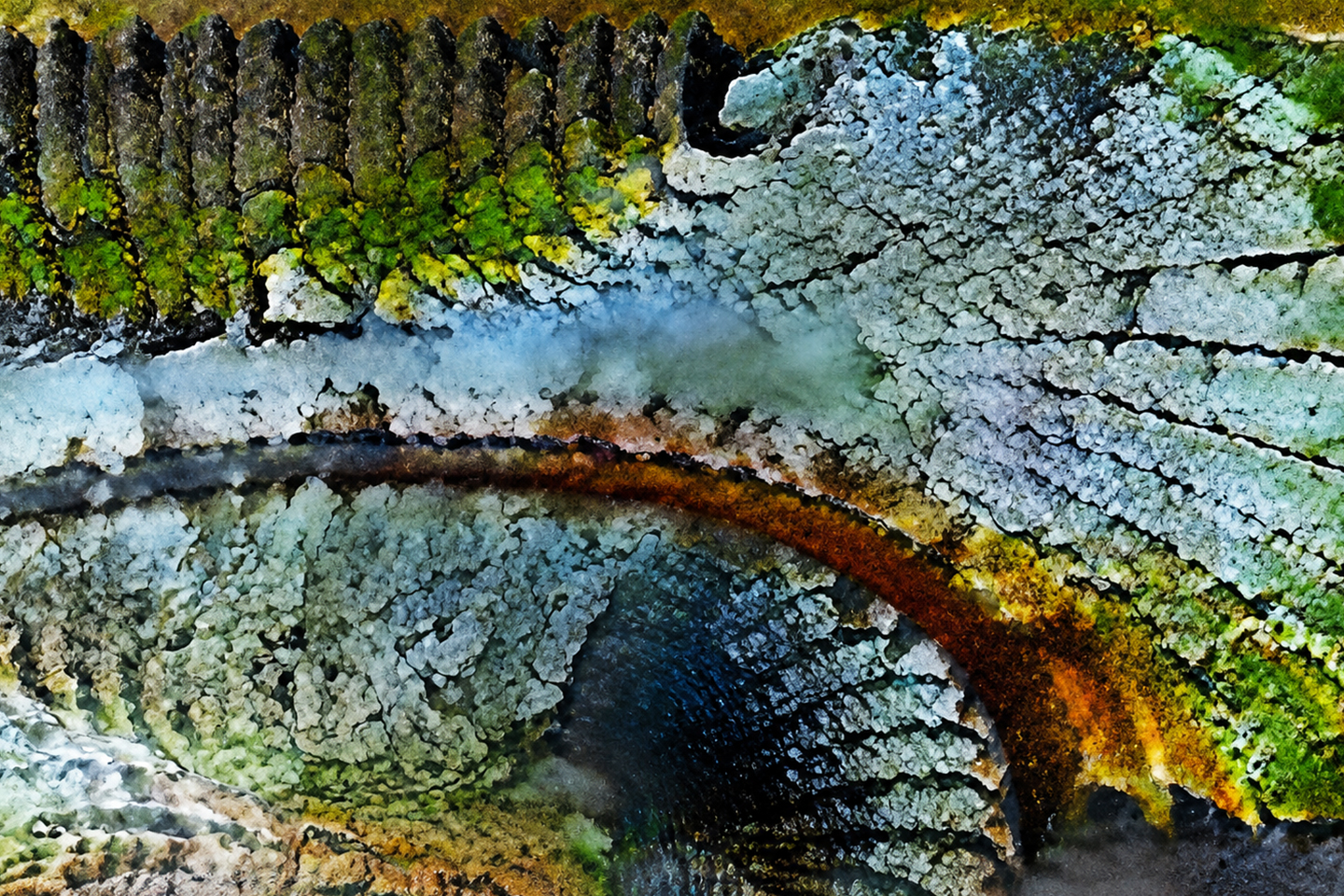
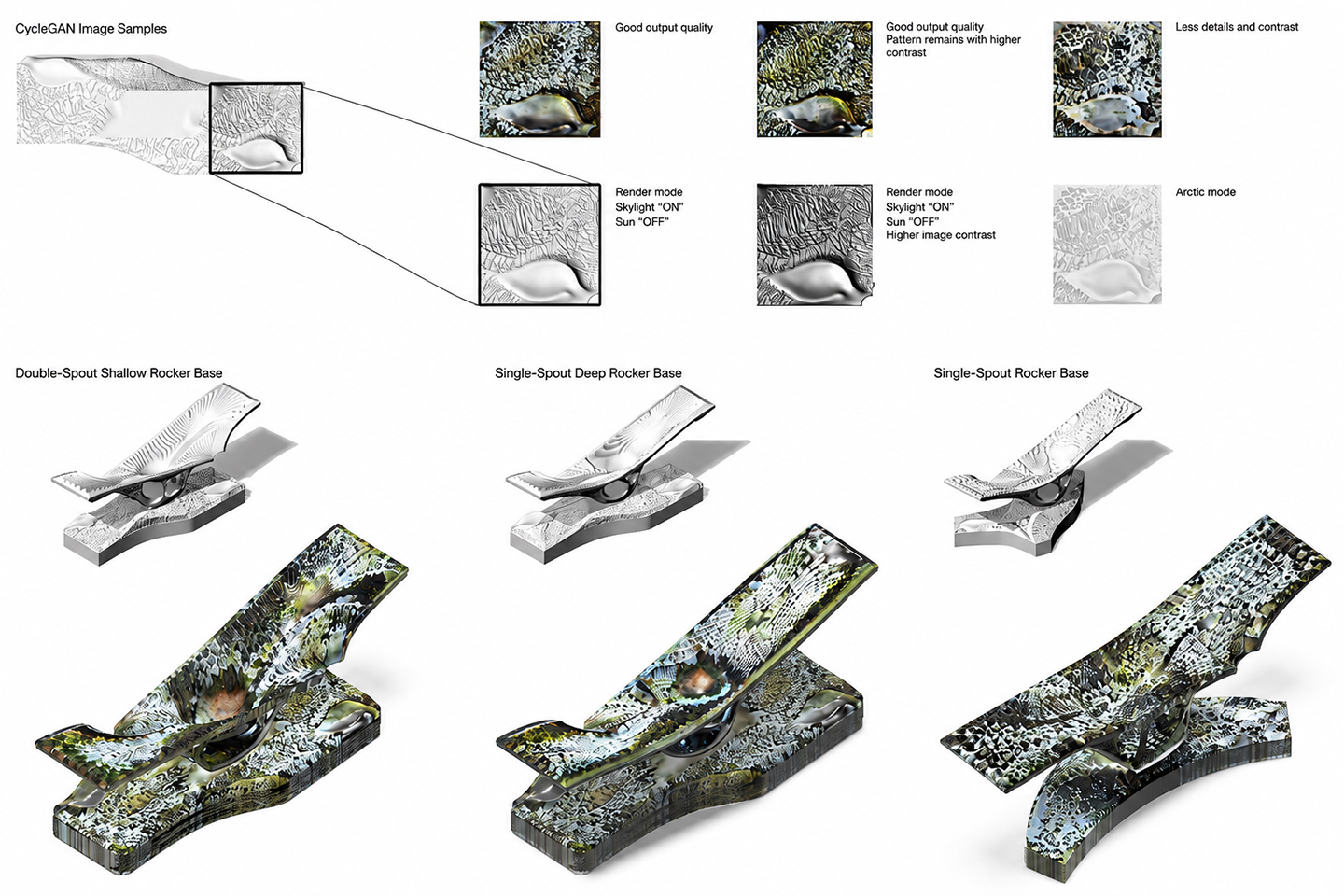
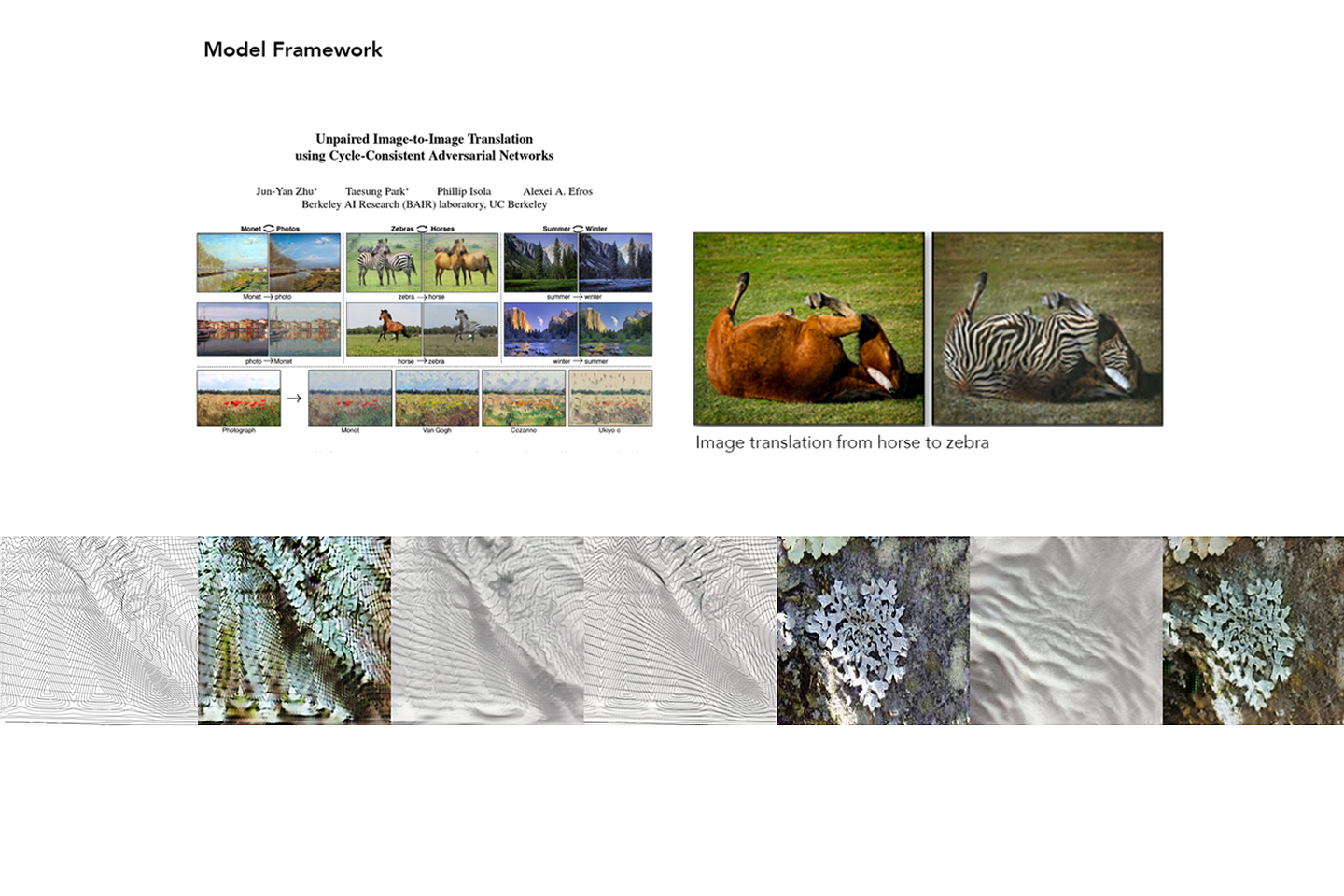
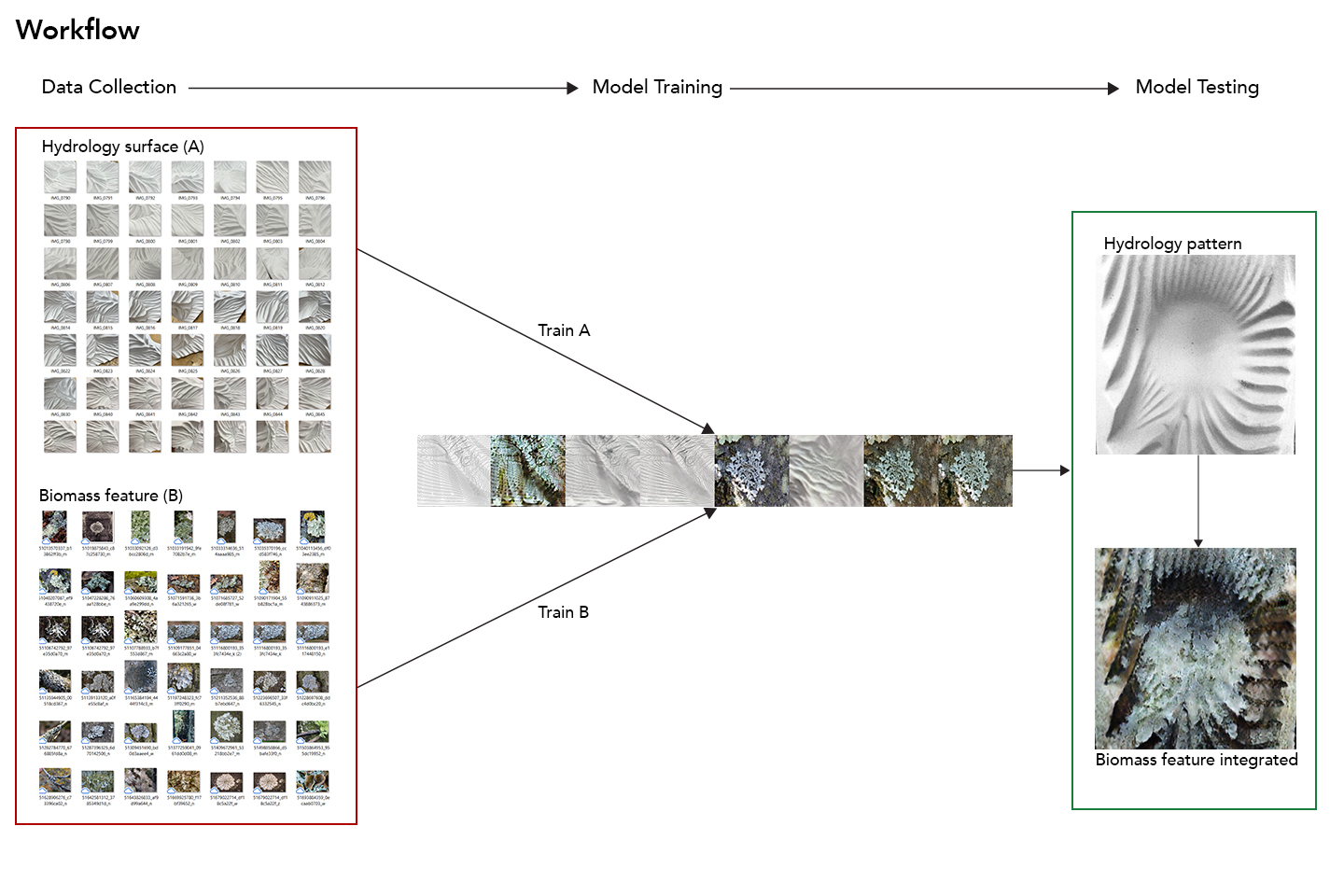
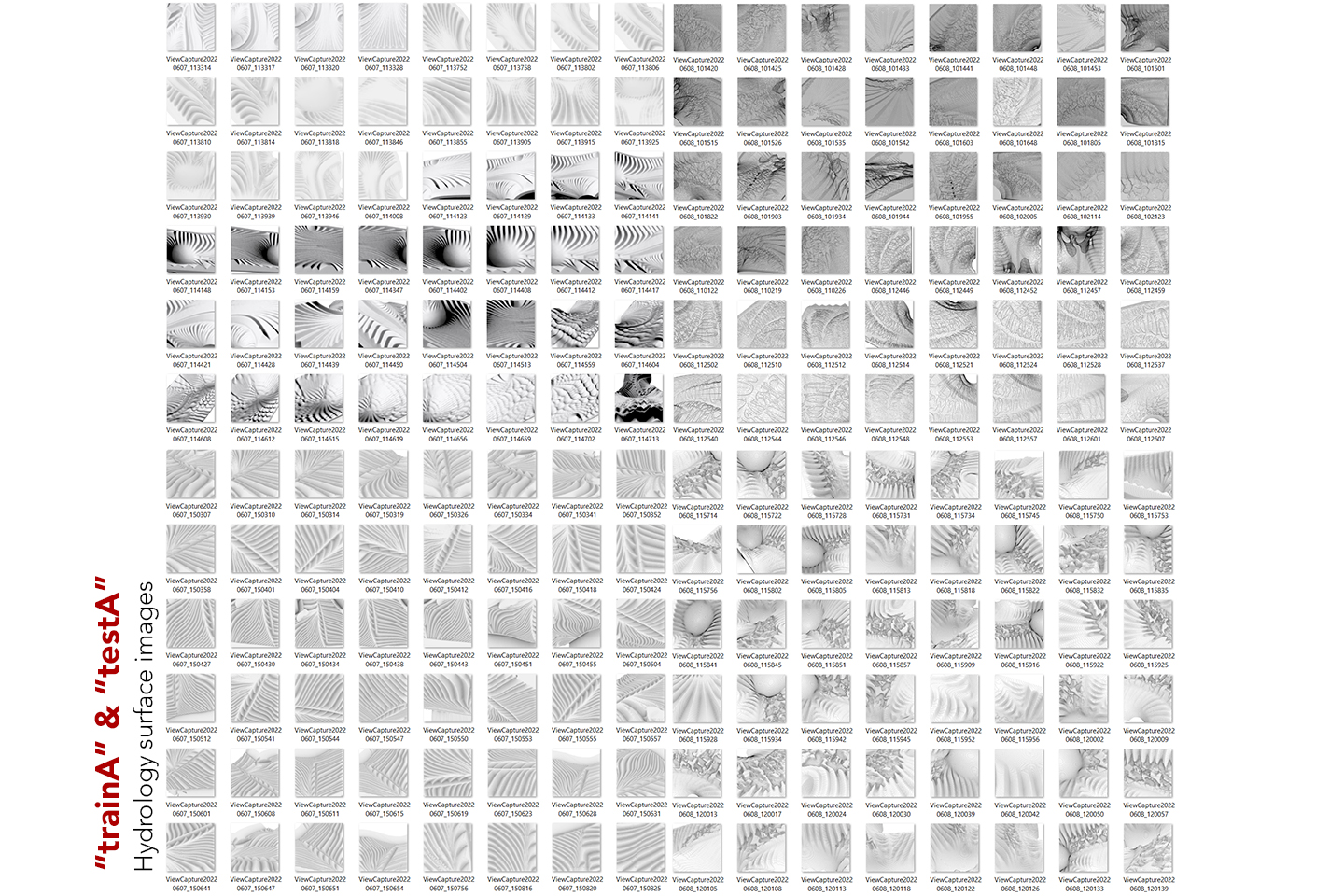
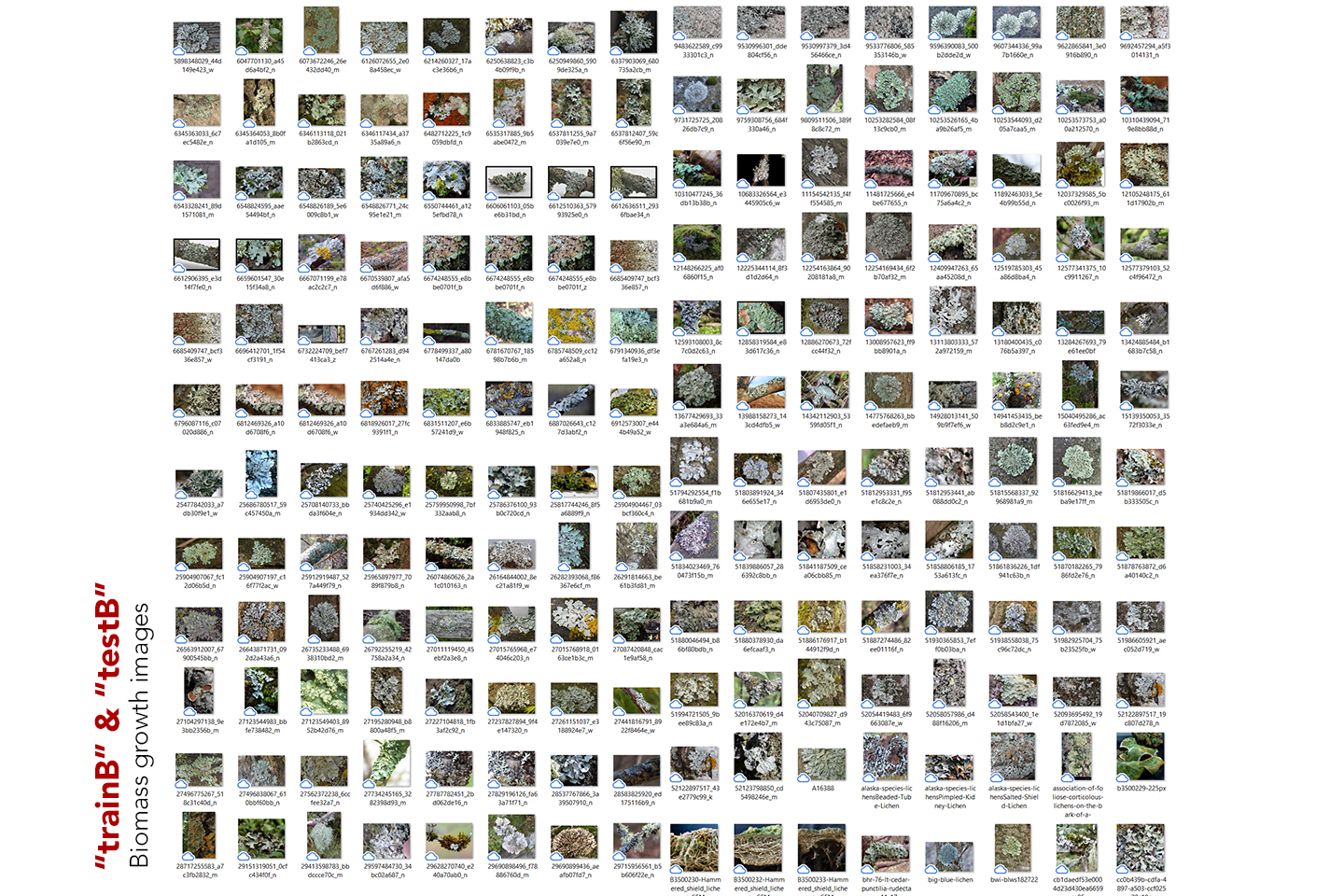
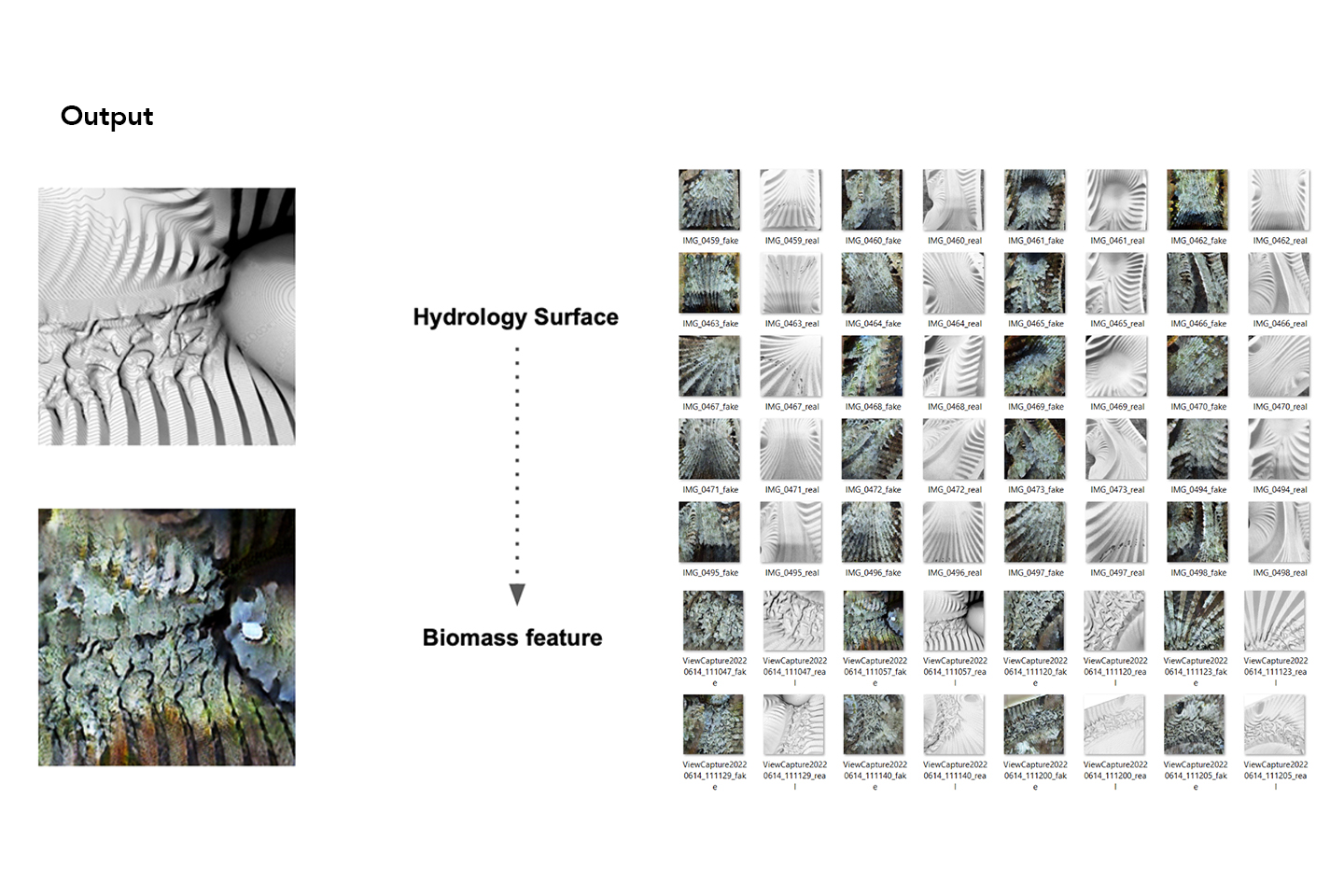
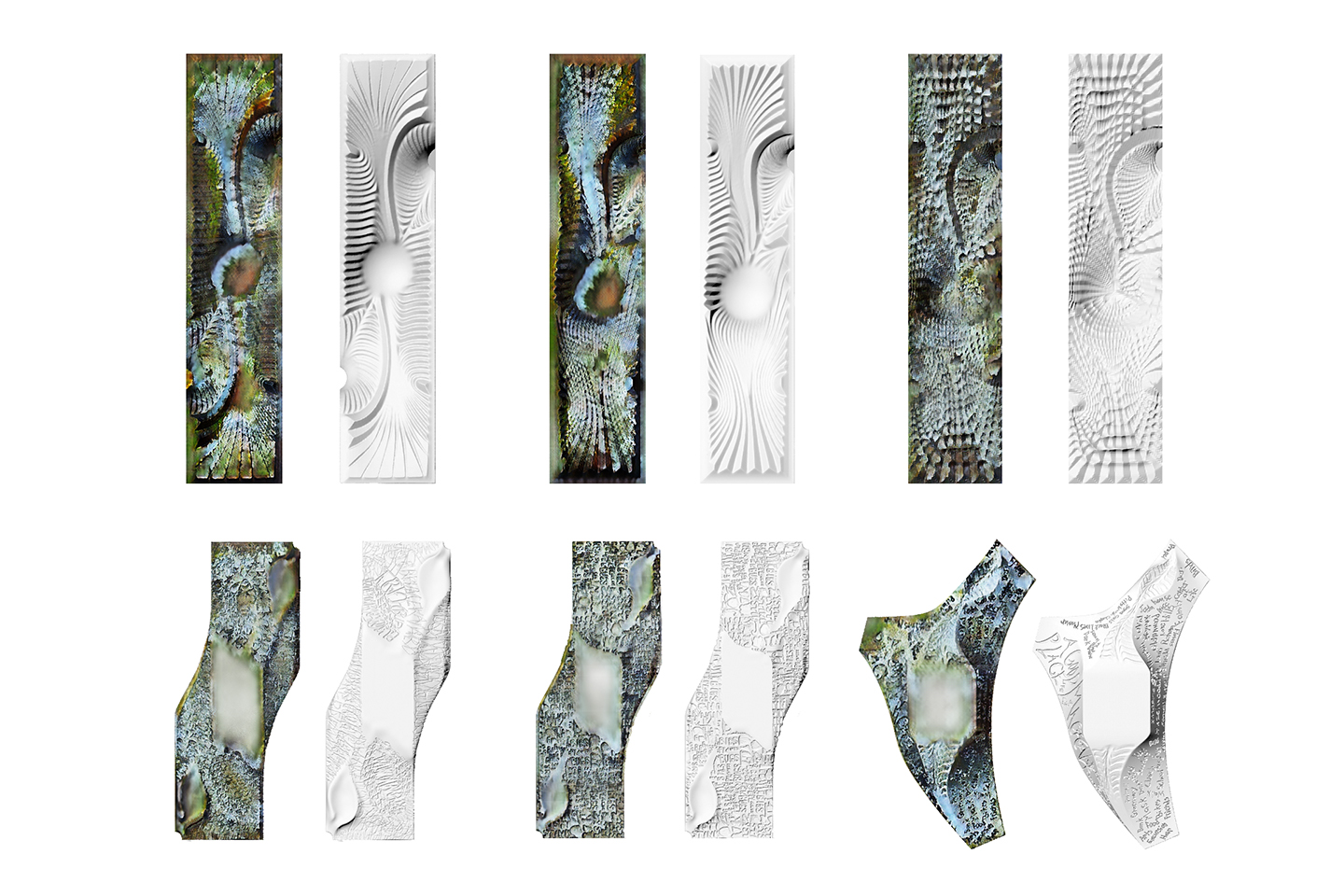
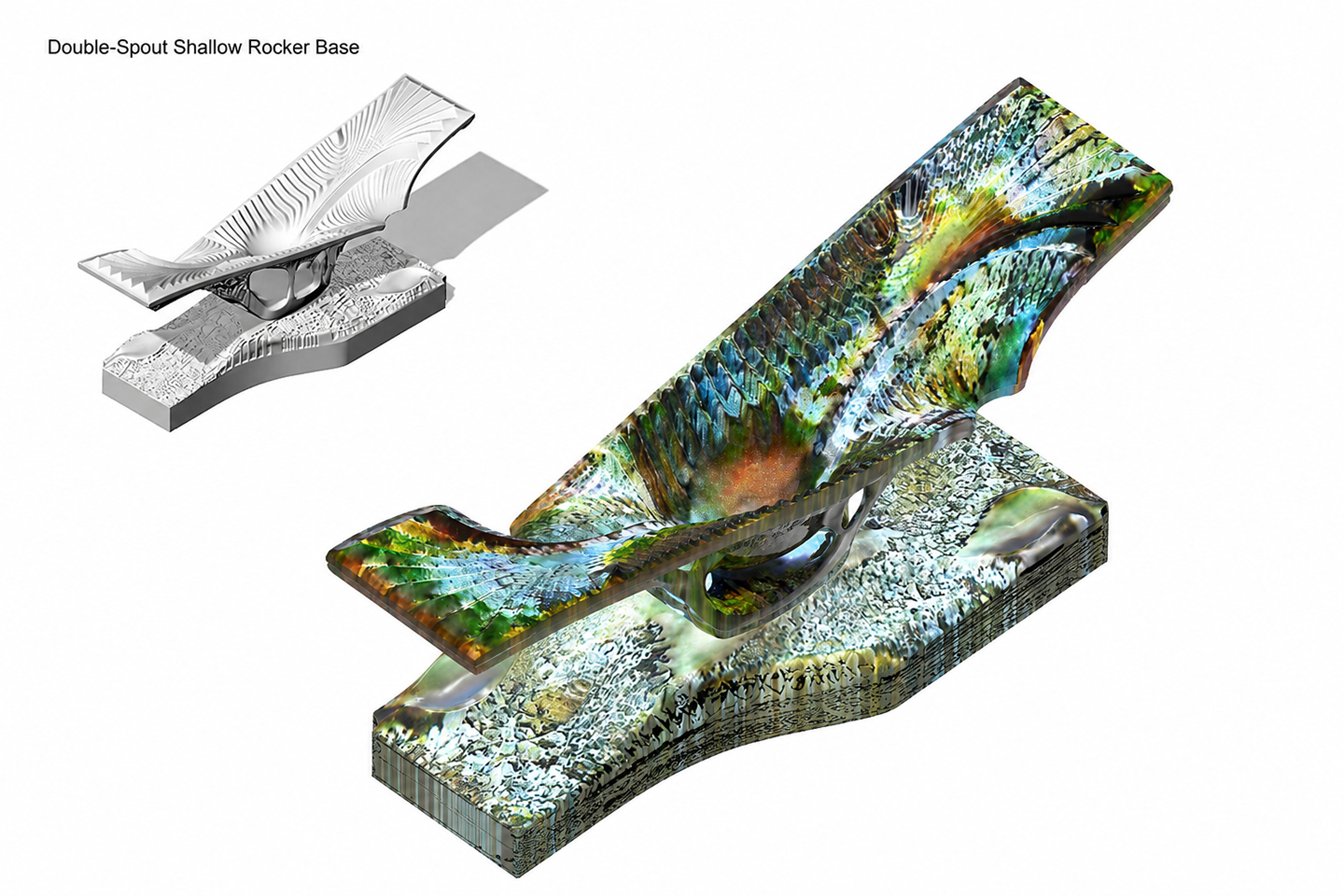
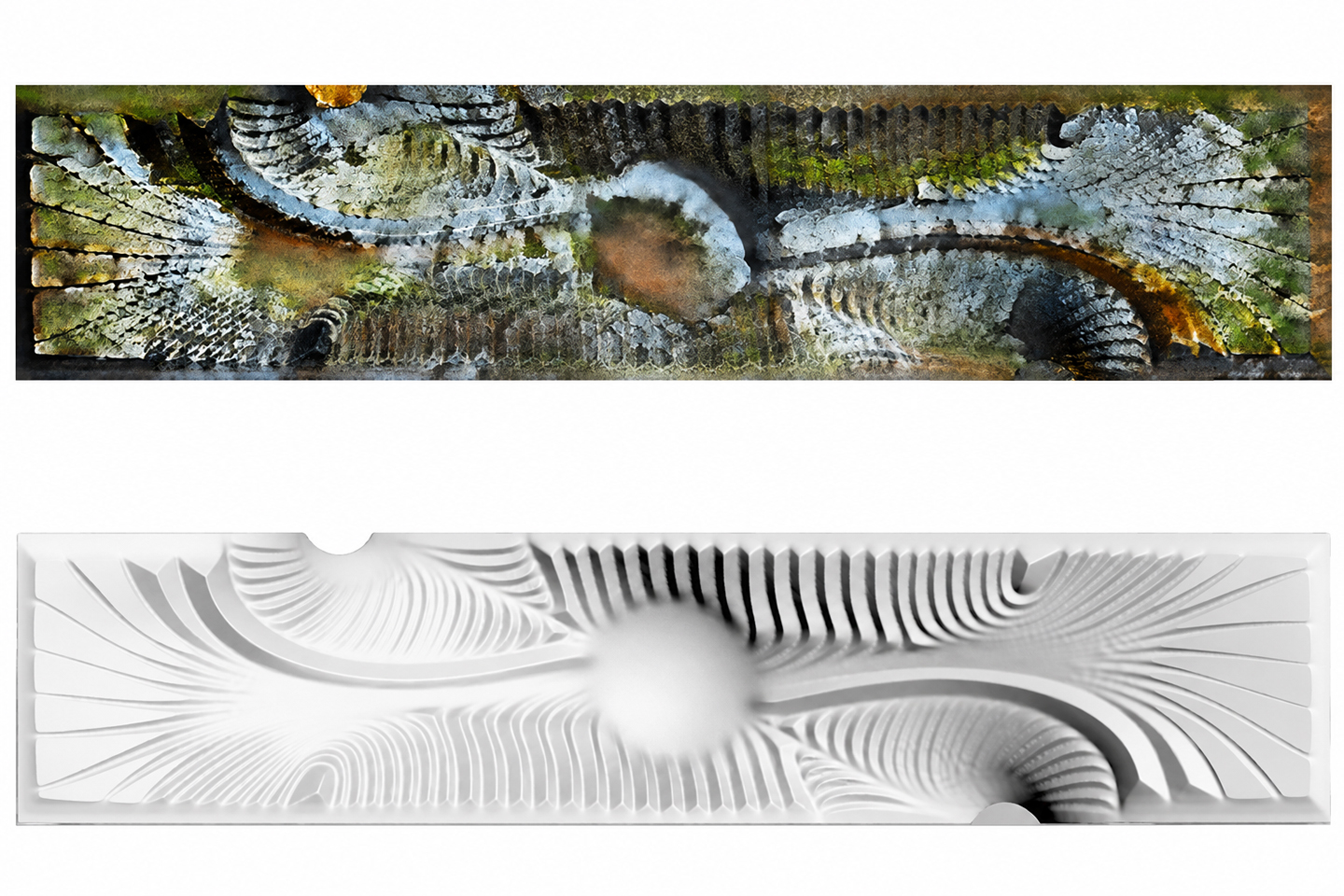
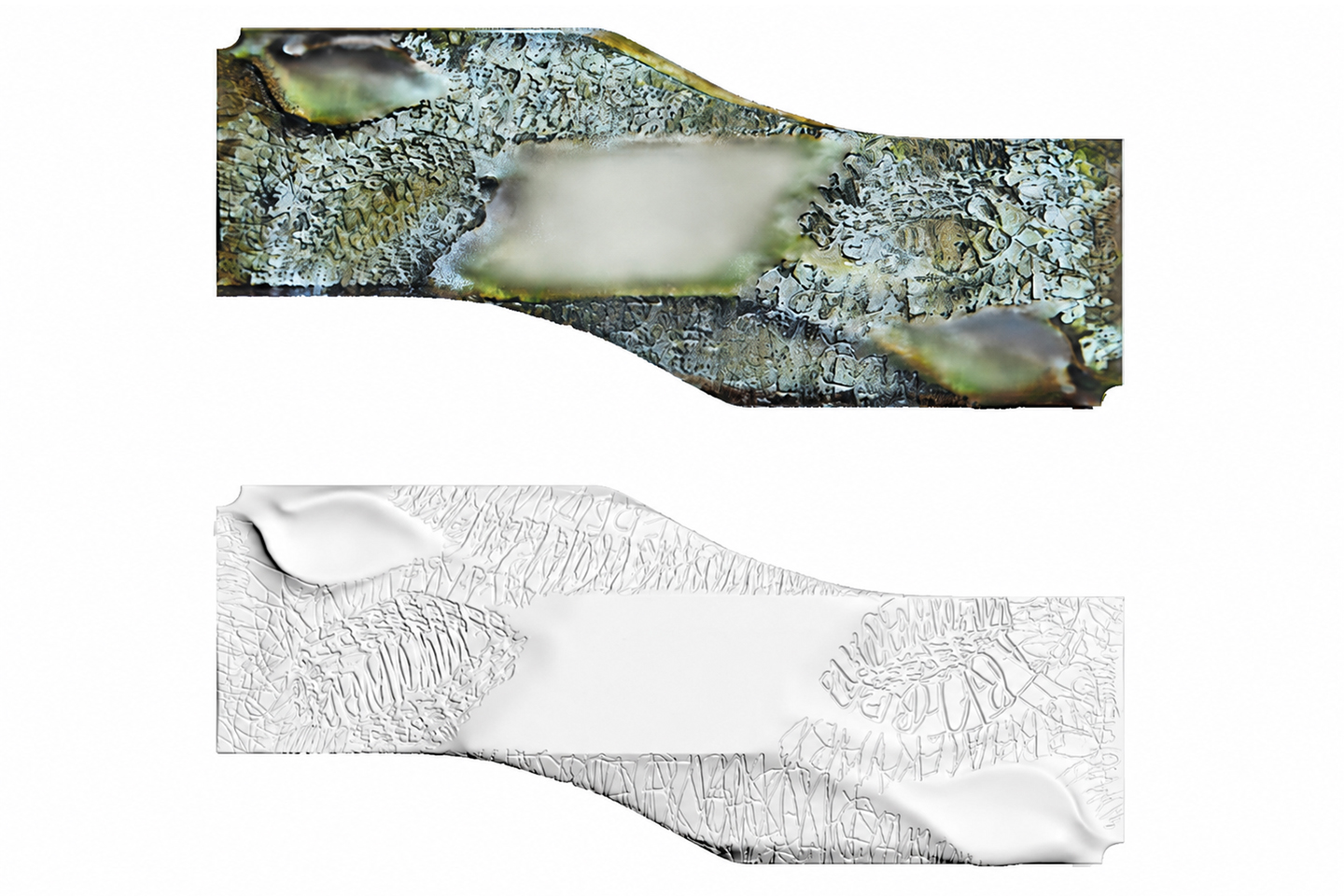
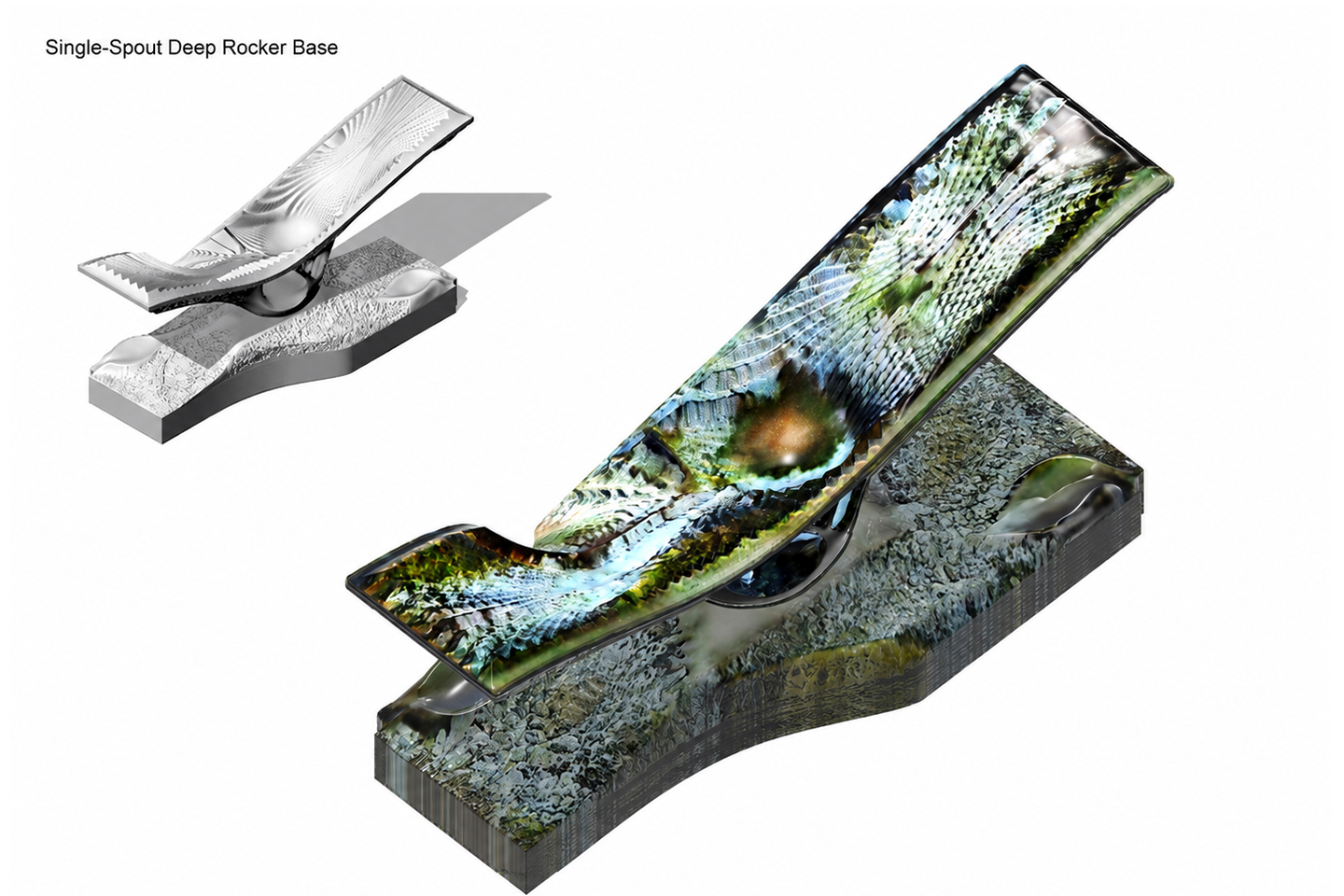
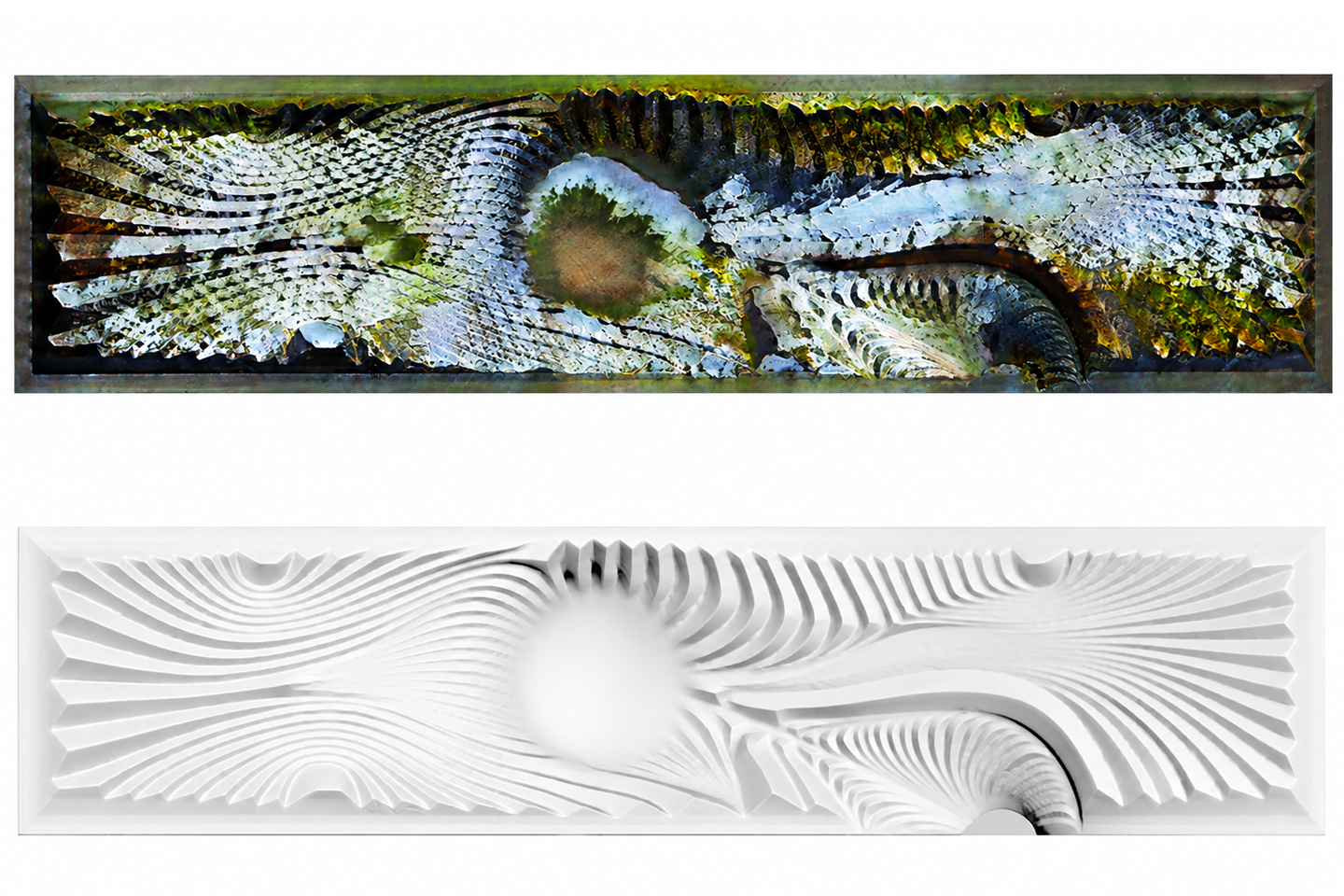
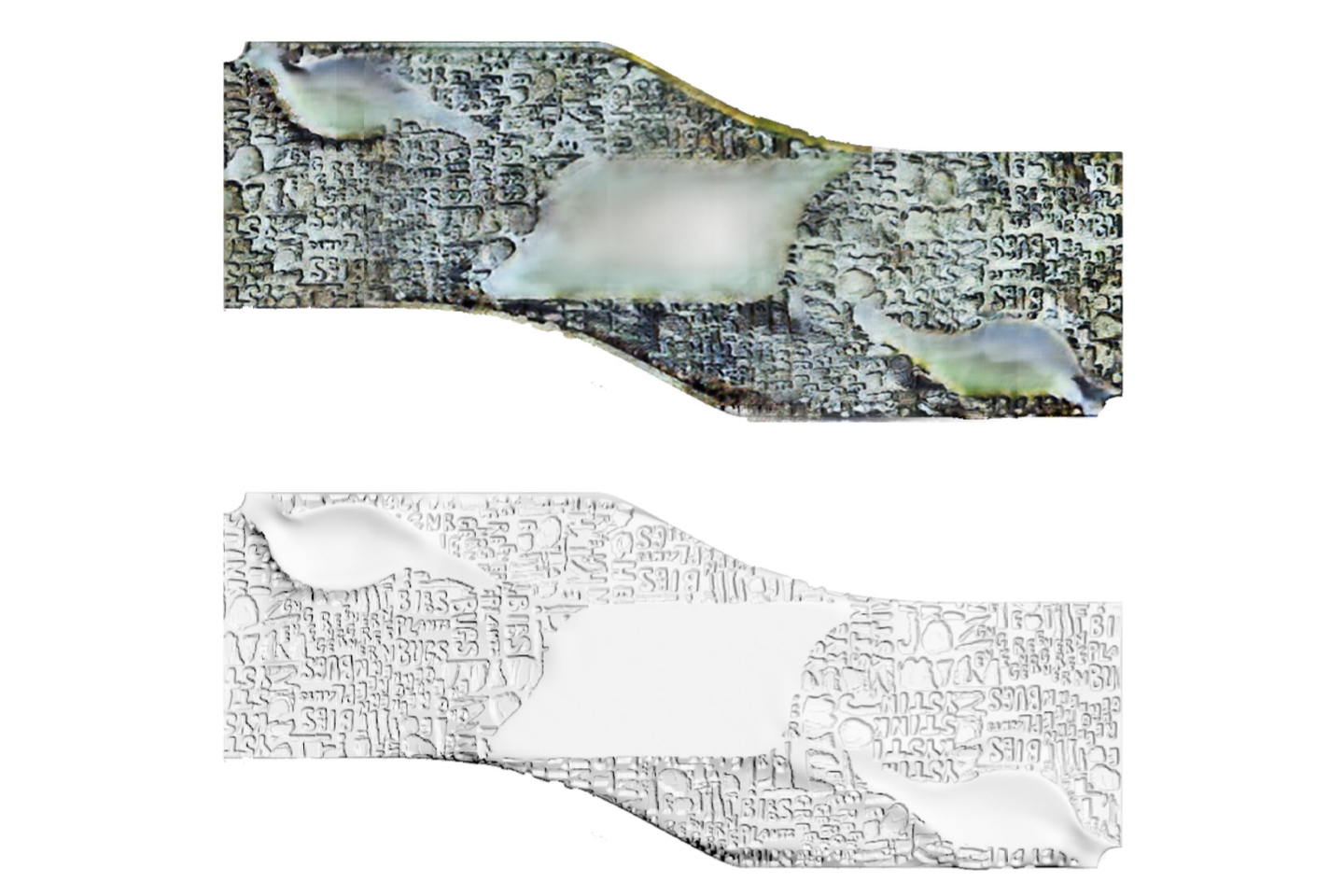
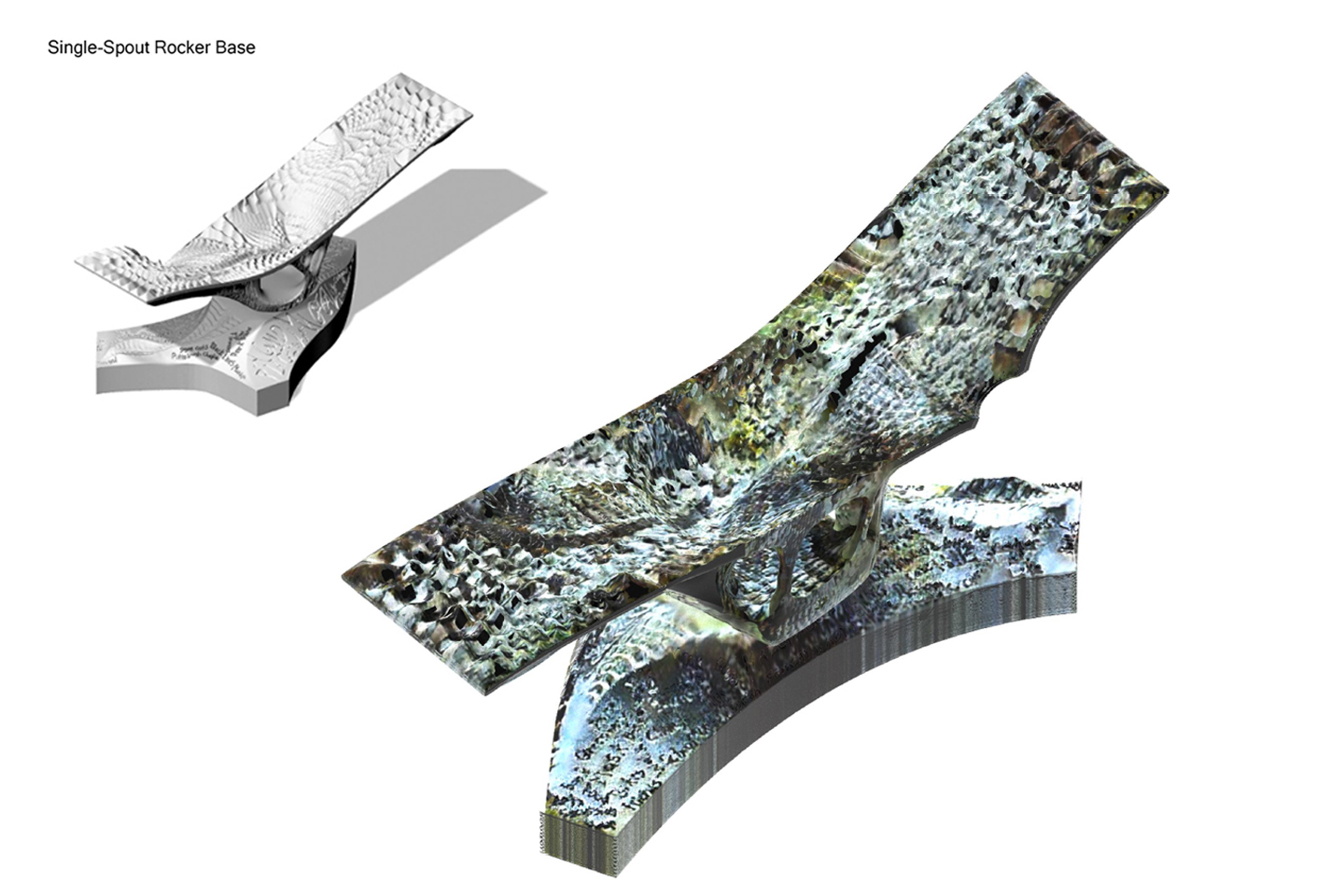
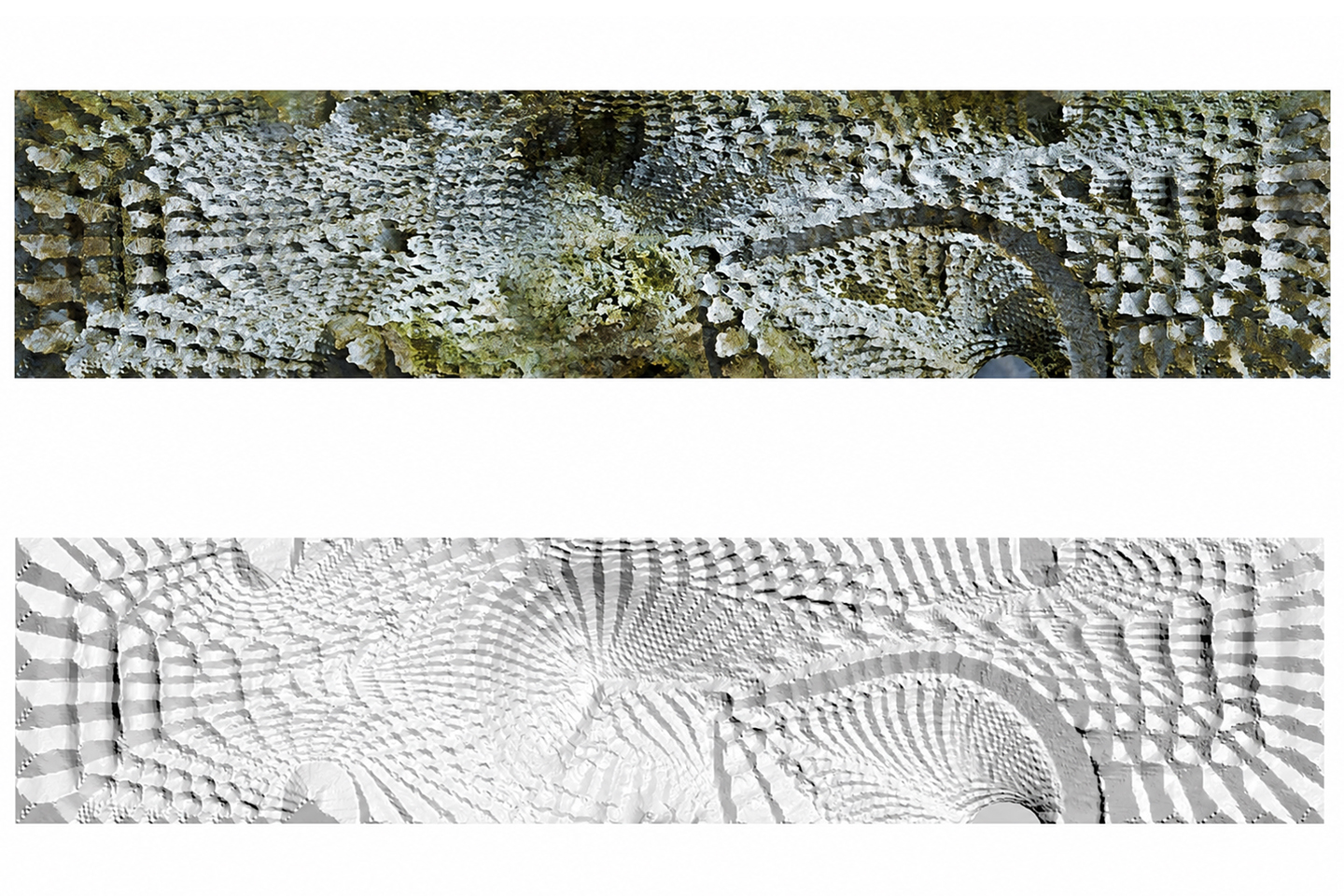
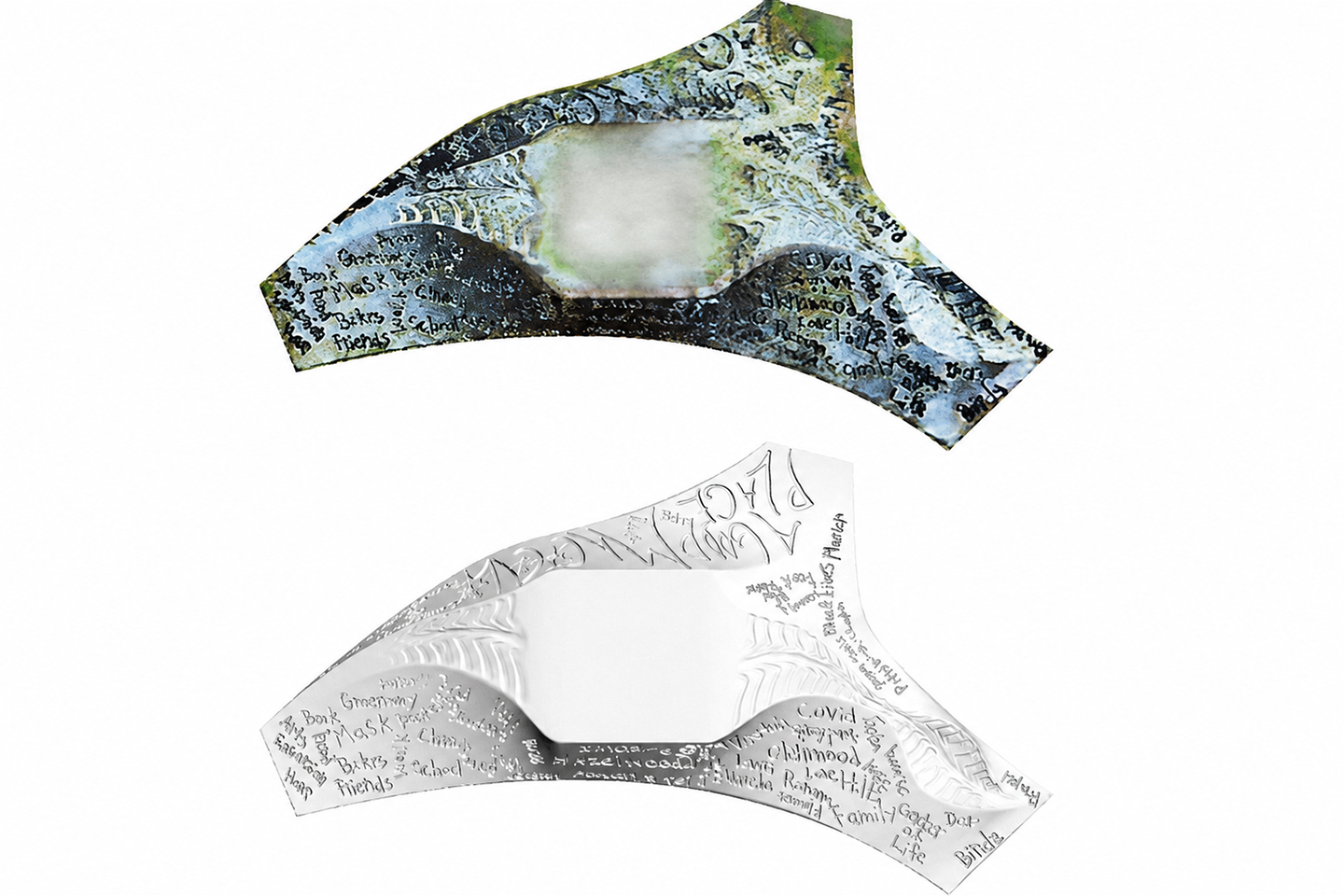
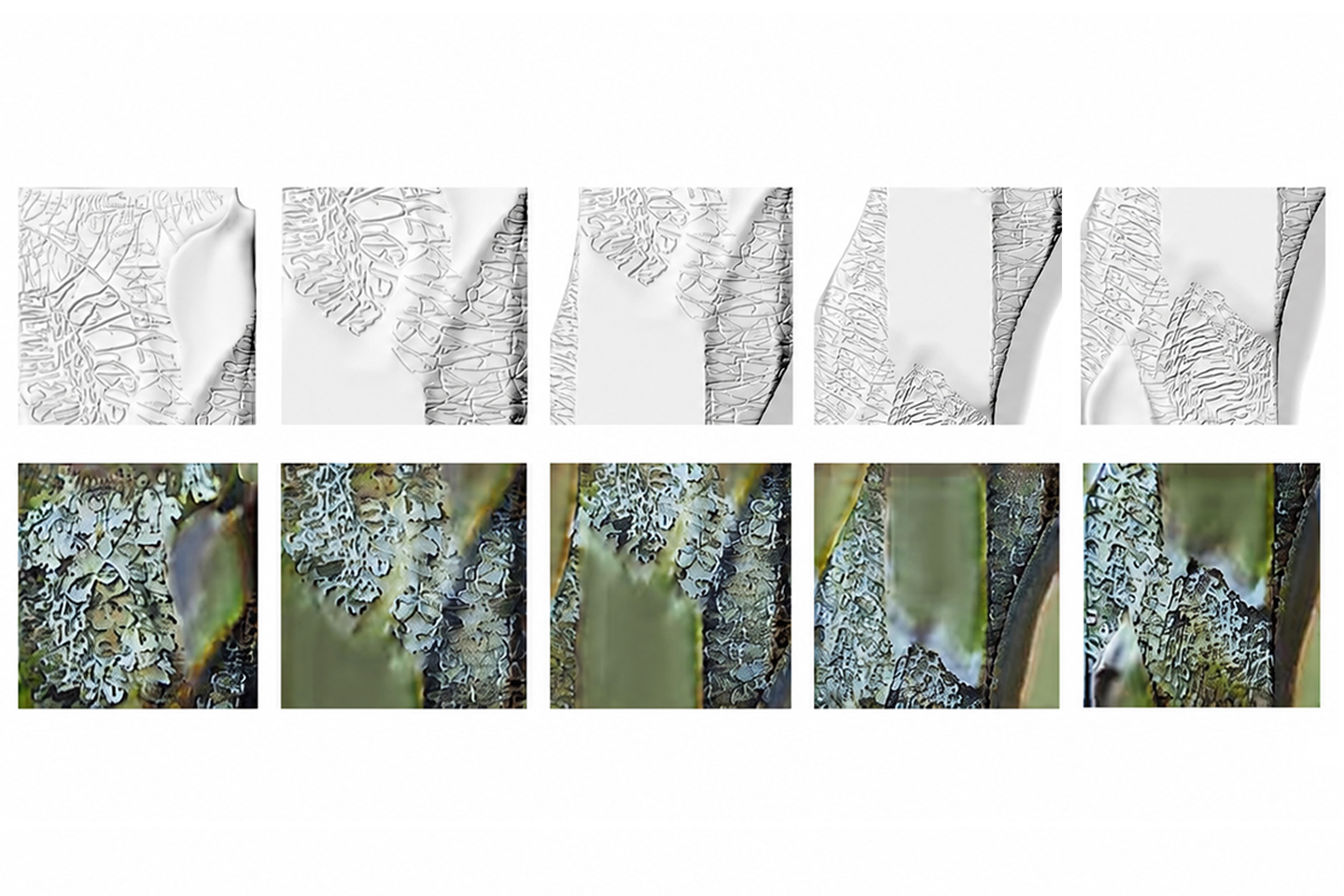
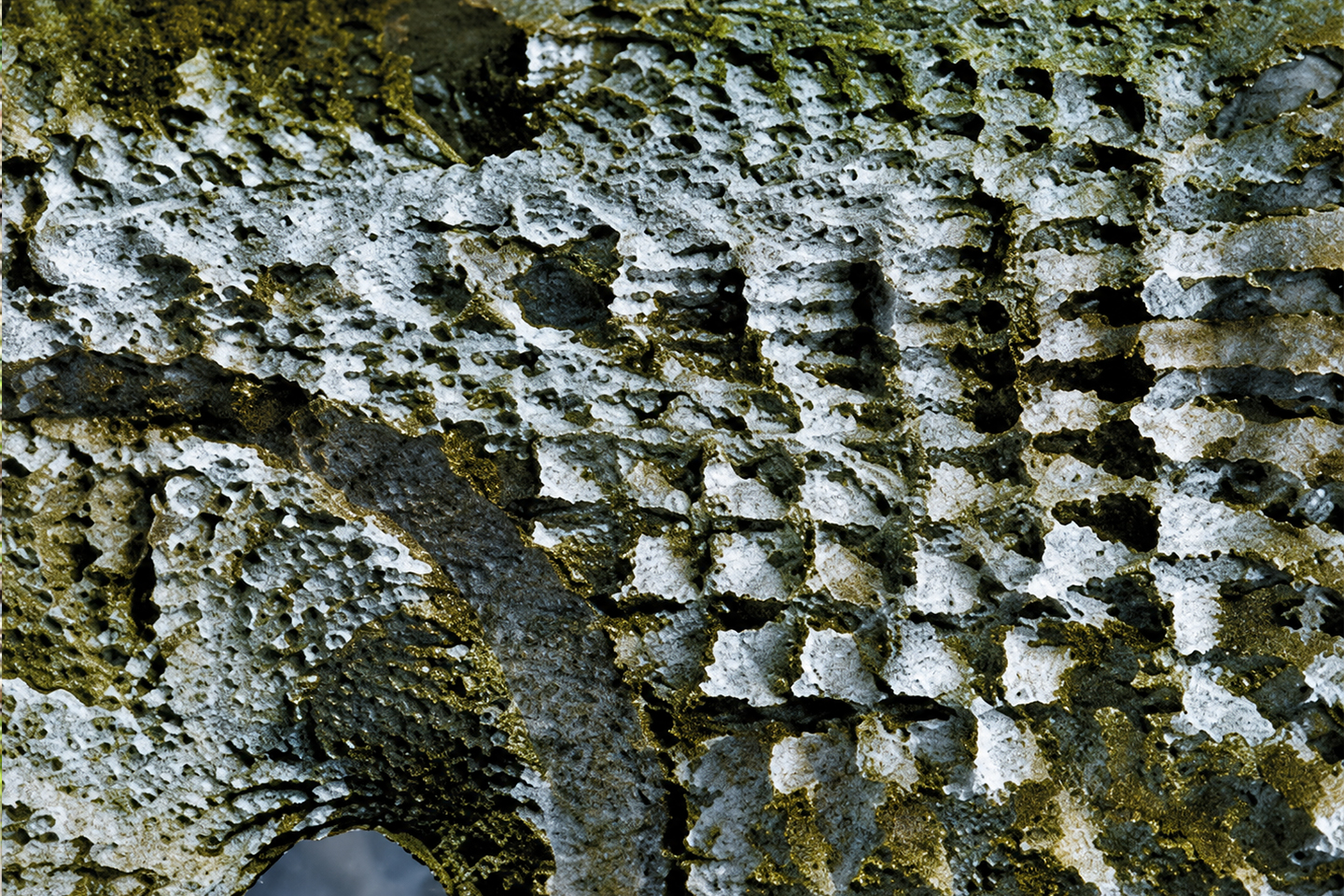
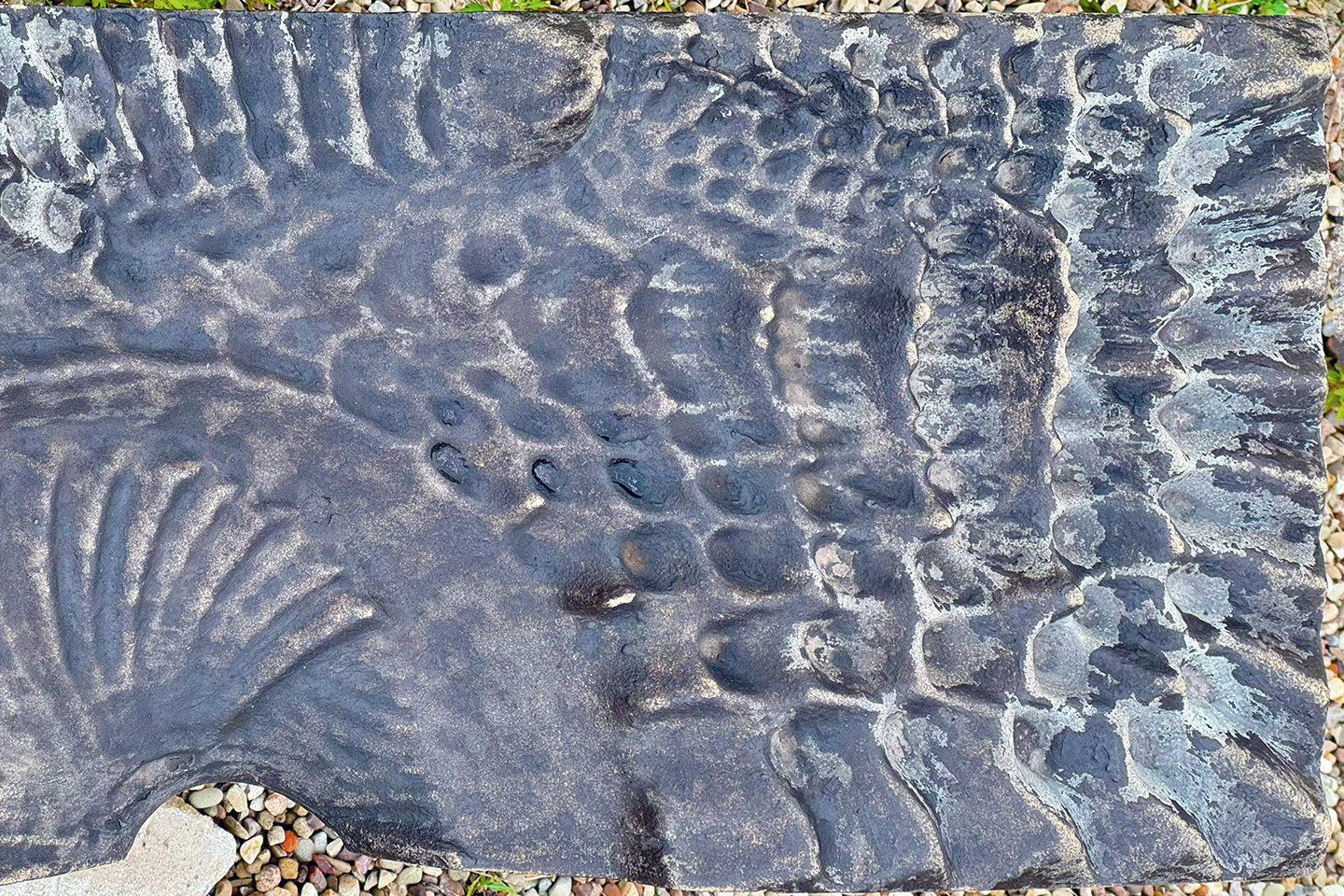
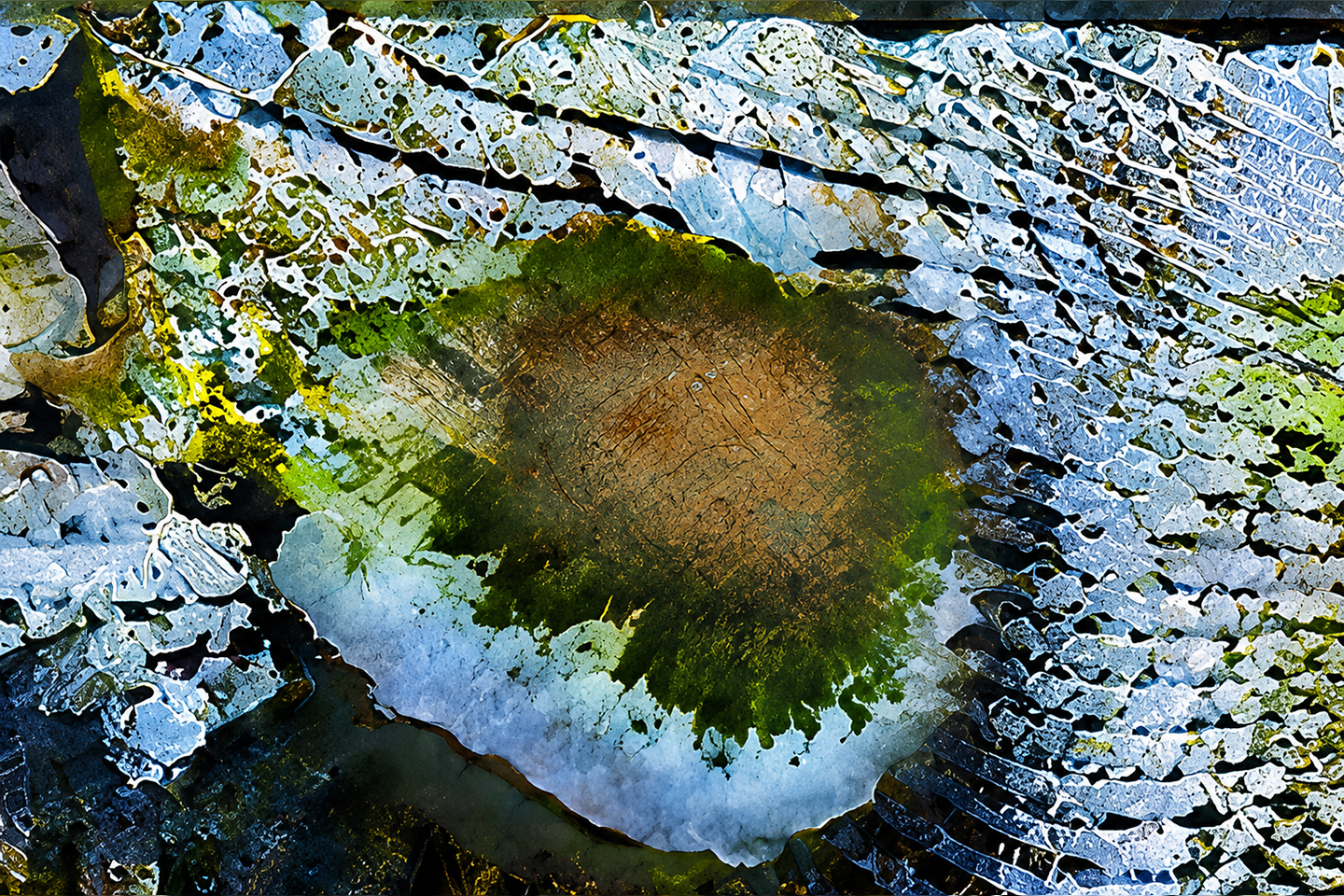
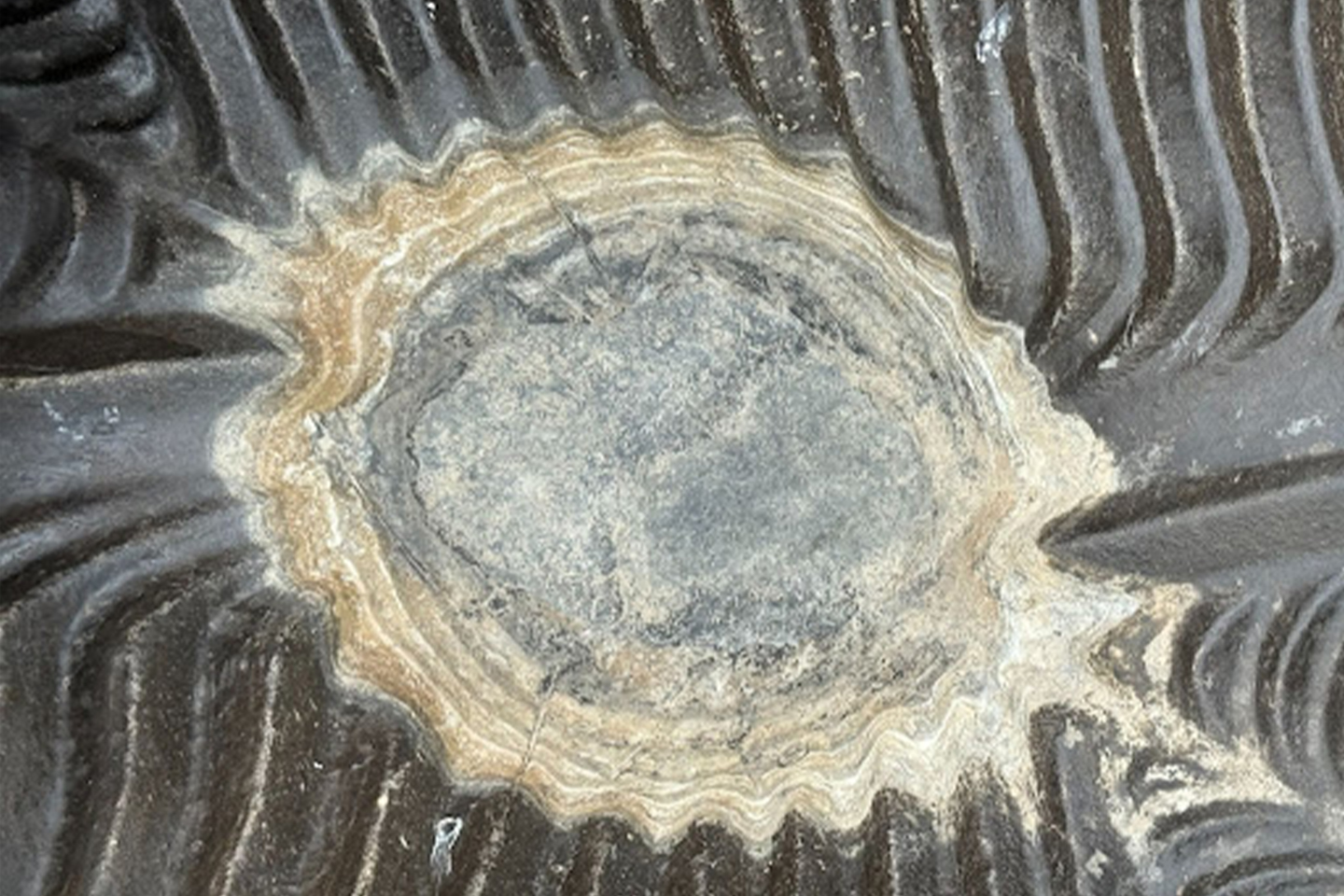
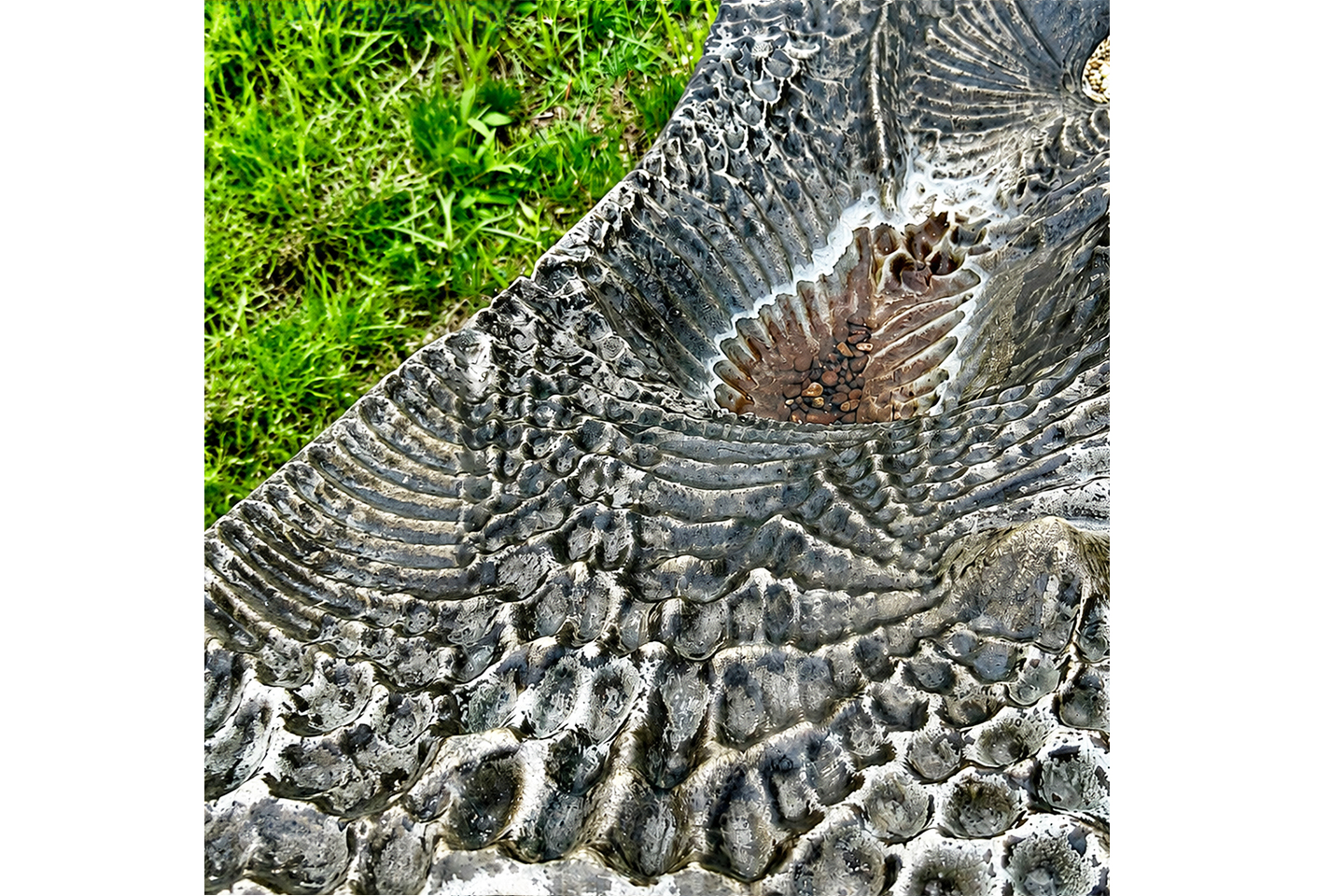
Hydro2Biomass CycleGAN explores the use of machine-learning style transfer to visualize potential biomass growth on the hydrological surfaces of the Rocking Cradle vessels. The workflow uses a Cycle-Consistent Generative Adversarial Network (CycleGAN) to translate between two independent image domains: hydrological surface patterns and biomass growth features. Rather than requiring paired before-and-after images, the model learns the visual characteristics of each dataset and applies biomass-like qualities to hydrological surface images while preserving their underlying composition, geometry, and spatial structure. In this context, CycleGAN becomes a design-research tool for projecting how water-guiding surface articulation might condition future biological occupation, staining, weathering, and plant growth. The implementation was carried out using an open-source PyTorch CycleGAN framework in Google Colab. The workflow included collecting and organizing image datasets, separating them into training and testing folders, training the model to establish bidirectional mappings between hydrology and biomass domains, and evaluating the translated outputs. Hydrology surface images served as the base domain, while biomass growth images provided the visual features to be transferred. The project demonstrates how generative AI can support ecological design research by visualizing possible interactions between fabricated surfaces, water movement, and living systems over time. For the Rocking Cradle project, this process extends the design inquiry beyond the built object, offering a way to imagine and assess how binder-jet vessels may weather, host biomass, and become increasingly entangled with their landscape environment.